ROCTEC Promotes Responsible Material Use Through Circular Economy
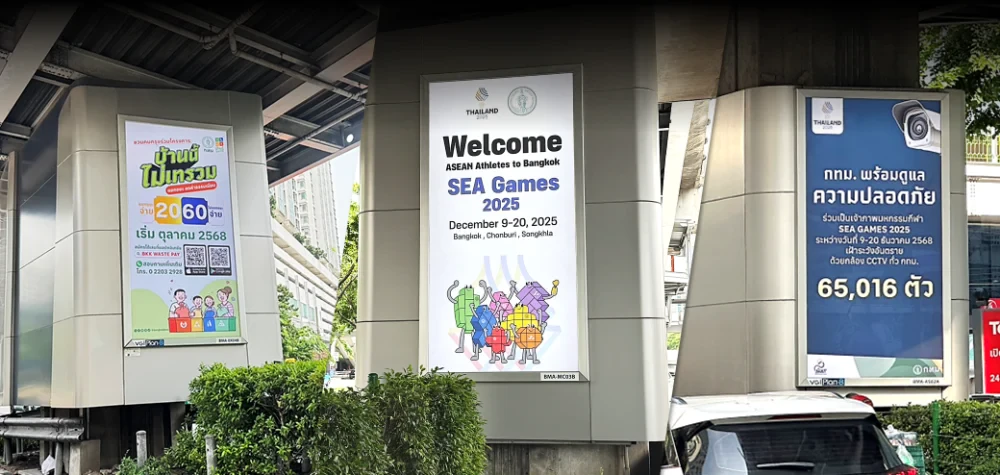
In recent years, environmental, social, and governance (ESG) considerations have become a growing expectation for businesses from investors, partners, customers, and broader society.
ROCTEC, as a service provider bridging media and technology, recognises that business responsibility today extends beyond communication efficiency and operating performance to include effective resource management and the reduction of environmental impact across operations.
This is especially relevant in the out-of-home (OOH) media business, where campaigns operate in public spaces, shape how brands connect with audiences, and rely on materials at every stage from production and installation to on-site use and post-campaign handling.
ROCTEC therefore focuses on operating the business alongside efficient resource use, responsible management of used materials, and driving growth in line with long-term sustainability goals.
ROCTEC believes the answer does not lie in sustainability as a principle alone, but in turning that principle into practical actions embedded in day-to-day operations. The starting point is what the organisation can act on tangibly. One example is rethinking the role of used vinyl not as waste awaiting disposal, but as a resource with the potential to create new value once again.
This approach aligns with the circular economy concept, which focuses on maximising resource efficiency and extending the lifespan of materials. Under this model, used materials do not necessarily become waste. They can be further developed or transformed to create new value through upcycling. For ROCTEC, vinyl that has completed its role as advertising media can still be reintroduced to create value in new forms, rather than being discarded or removed from the system.
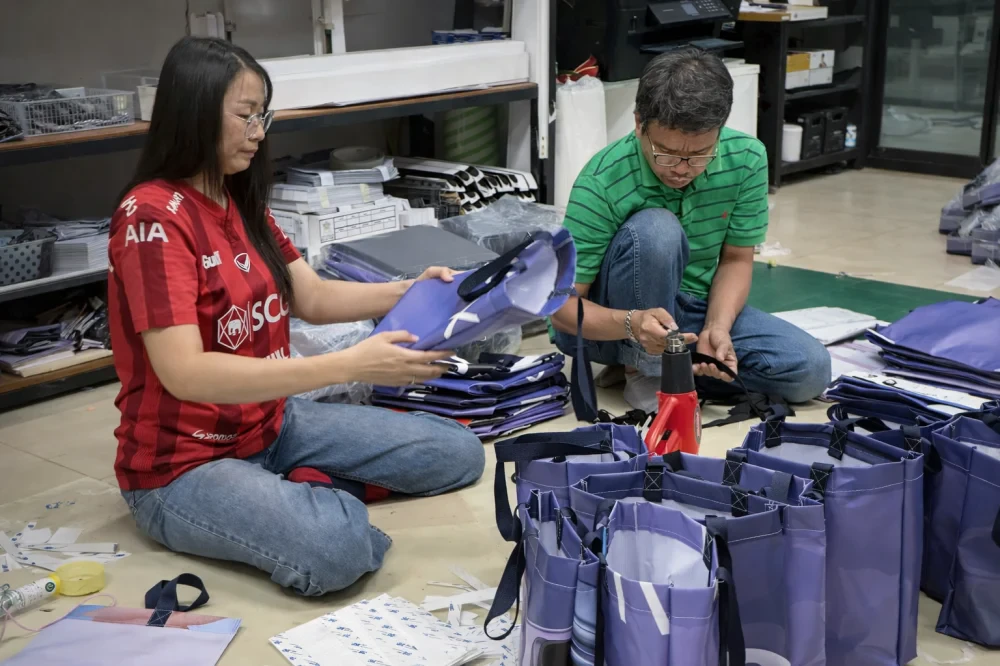
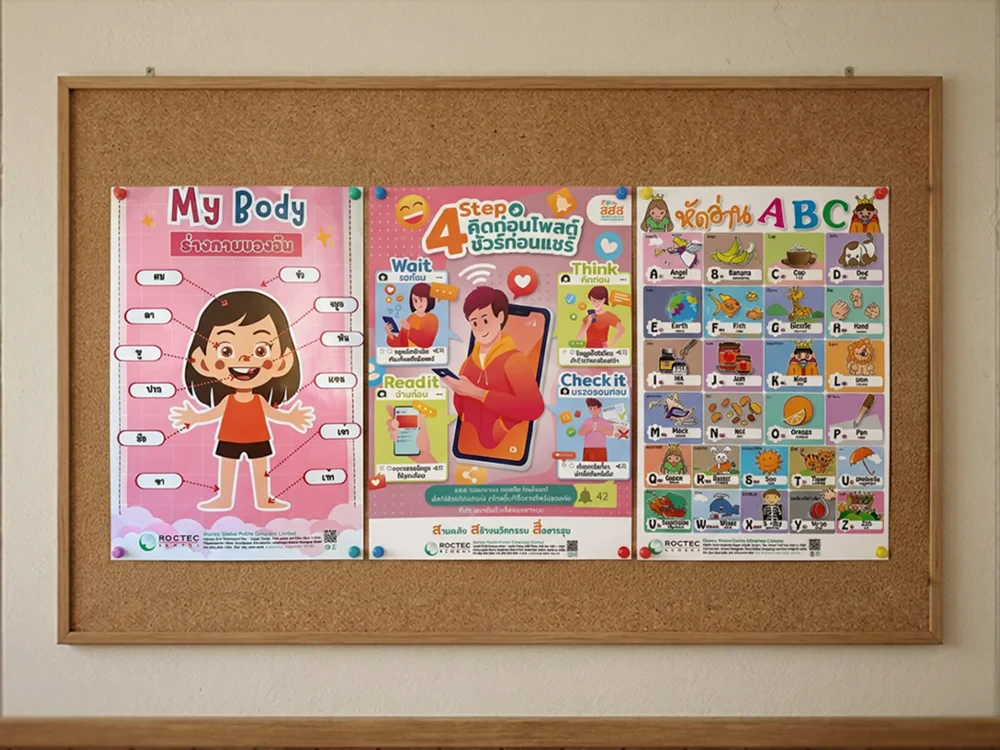
In practice, this approach has been translated into tangible benefits for communities and schools. ROCTEC has repurposed used vinyl from advertising media into educational materials, cyber safety awareness media, waste segregation campaigns to address global warming, and school bags for students. These items have been delivered to four schools in Sisaket Province: Ban Thung Noi School, Ban Phon Yang School, Ban Hen Oum School, and Ban Nong Ta Kien Nong Du School.
The project has delivered more than 300 items, including school bags, educational materials, cyber safety awareness media, and environmental campaign materials. These were provided to schools in April 2026. This reflects the potential of materials once considered obsolete to be extended into new forms of value in supporting learning, raising awareness, and enabling practical use in everyday life.
As such, this is not merely about post-campaign material management. It is about creating new value by reducing waste, extending the life of resources, and delivering meaningful benefits back to the community.
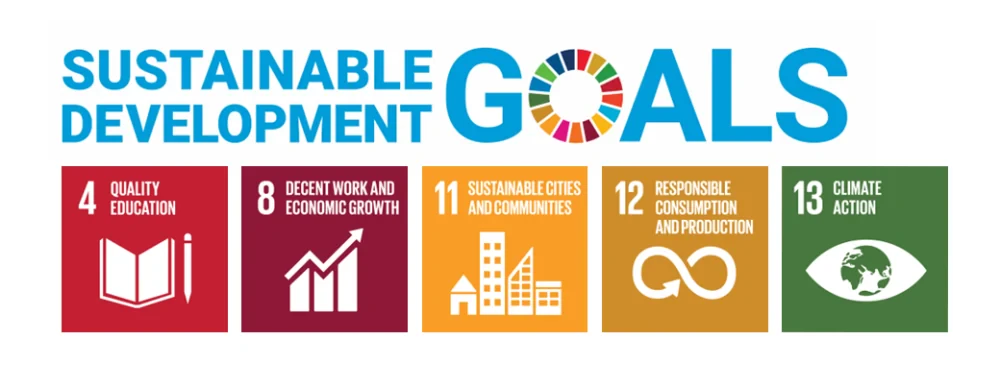
In addition, the project demonstrates clear alignment with the United Nations Sustainable Development Goals (UN SDGs). ROCTEC enhances access to education for youth in remote areas, develops skills and expands the capabilities of personnel to create broader value, and applies circular economy principles by repurposing used materials for new applications. This approach not only reduces waste, but also helps mitigate environmental impact and climate change, reflecting a business model that balances economic growth, social responsibility, and long-term environmental stewardship.
For ROCTEC, this approach shows that ESG is not distant or confined to policy. It can begin within the details of business operations starting from how materials are viewed to how processes are designed to deliver real positive impact.
As sustainability becomes a key expectation among stakeholders, ROCTEC views this not as an added burden, but as an opportunity to elevate operating standards and create long-term value from practical actions.
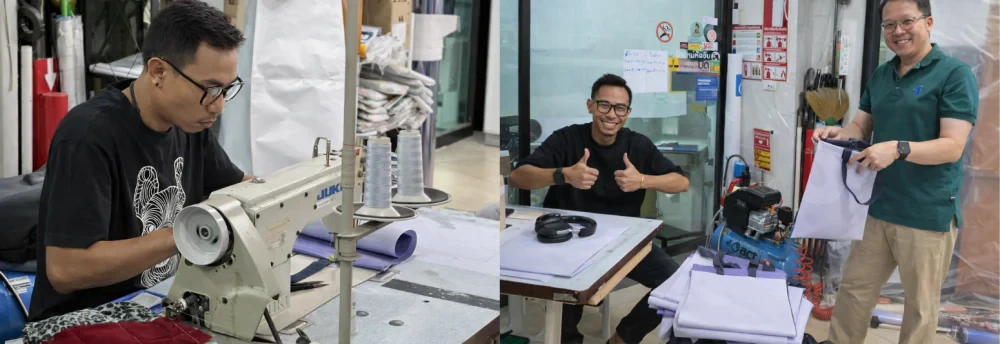
Ultimately, repurposing used vinyl into bags while engaging nearby communities in the production process may seem like a small step. However, it reflects a meaningful business mindset recognising the value of resources at every stage of use and reinforcing the belief that business growth can go hand in hand with creating positive impact.
Importantly, ROCTEC does not view this initiative as a one-off activity. ROCTEC aims to establish this as an ongoing approach carried out each year, with plans to expand support to schools in other provinces. This reflects ROCTEC’s commitment to transforming used materials into tangible value that can be continuously delivered across environmental, educational, and broader social dimensions.
Although ROCTEC’s out-of-home media business is not the core business, ROCTEC continues to place importance on operating this segment under an ESG framework. ROCTEC focuses on minimising environmental impact from resource use, while using media responsibly to create social value. At the same time, ROCTEC leverages digital media to enhance communication efficiency and reduce resource consumption compared to traditional formats. At a broader level, ROCTEC operates its core business as an ICT solutions provider, covering services from consulting and system design to installation and maintenance of information and communication technology infrastructure for both public and private sector clients. This reflects ROCTEC’s role in advancing both media and digital infrastructure towards a more balanced future enhancing efficiency, reinforcing responsibility, and supporting long-term sustainability.