As a large chunk of the global population hunkers down in isolation away from their friends and family, technology has become a crutch for human connection.
According to GlobalWebIndex, 48% of US and UK consumers use social media to read more news as a result of the outbreak, meaning platforms now have even greater responsibility to prevent the sharing of misinformation.
So, as usage soars, how are social media responding in order to help its users be better connected, informed and supported in the face of a global pandemic?
Its Covid-19 Information Centre is one of the most prominent and useful changes the platform has seen since the beginning of the coronavirus pandemic. Accessible directly from the top of your newsfeed, or from the main menu, the feature is an expanded adaptation of its ‘community help’ function which was originally designed to help communities offer aid after localised disasters.

Facebook has clearly made the effort to ring-fence an area of its platform for reliable news sources, making it more difficult for misinformation to gain traction – as long as it doesn’t make an unwanted appearance in users’ personal newsfeeds.
Perhaps the most unique feature of all is the ability to ‘offer and request help’, which has a dedicated page that users can filter through based on things like distance to their current location and type of request (e.g. baby supplies, food, transport and so on). This helpful UI makes it as easy as possible to support those in need while taking into account the individual circumstances of both parties. For example, I don’t own a car, so I would filter by requests that are closest to me to ensure I am able to fulfill my offer to help.
While TikTok has integrated a few new features into its platform, The most noticeable of these is a small shield icon, permanently placed at the top right hand corner of the feed, as well as a thin banner across the bottom if the content you’re viewing contains hashtags related to the virus – for example ‘#coronavirus’, ‘#lockdown’ or ‘#quarantine’.
such #lockdown or #quarantine. (Image via TikTok)
There are also three simple buttons – ‘Protect yourself’, ‘Mythbusters’ and ‘Q&A’ – which lead to various pages with easy to read copy written by the World Health Organisation explaining basic facts and advice.
YouTube’s #WithMe campaign is a fantastic example of a platform calling on its best creators to produce content that people will find genuinely useful, without necessarily reminding them of the coronavirus every time they click the play button. Meanwhile, information is readily available for those that arrive at the platform to find the latest news and updates on the pandemic. As I described earlier, there are clear ‘recommended’ coronavirus categories displayed on the main homepage, containing playlists from the NHS and various news publications to help keep users up to date with the national and global situation.
In a similar way to Facebook, Instagram is endorsing accurate coronavirus information and advice but this time through its search function. When typing ‘coronavirus’ or ‘covid19’ into the search bar, Instagram provides a direct link to the NHS website. A little further down, I can tap directly through to the blue-ticked WHO and Unicef Instagram accounts, too.
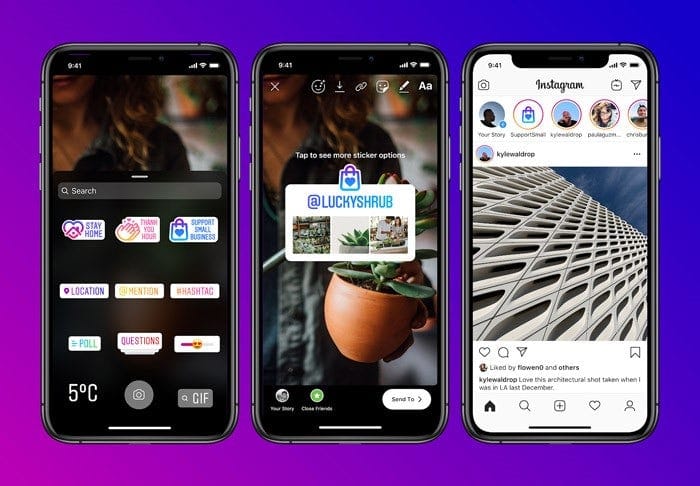
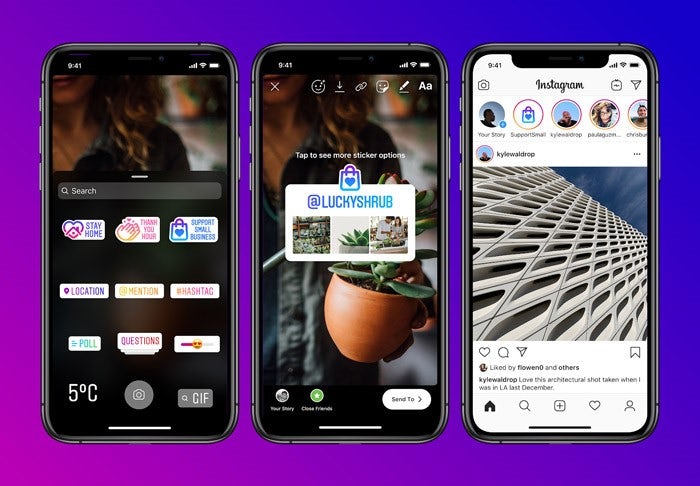
Instagram has also introduced new stickers, which can be used on Stories, to encourage users to embrace social distancing and ‘shopping small’ during the pandemic. In turn, stories from accounts you follow featuring such stickers are pushed to the top of users’ feeds, keeping these sentiments in front and centre of mind.
In March, the Stay Home sticker was introduced and saw huge uptake, with users from all over the world sharing sneak peaks into their daily lives from the safety of their homes. To date, the hashtag of the same name has 33.6 million Instagram posts attached to it. Later came the Support Small Business stickers in early May, which link through to a chosen Instagram account and can include up to three in-feed images to endorse certain products. These work particularly well on a localised level than some of the more generic Instagram stickers available, as they help promote stores, artists and creators that may otherwise struggle in this turbulent time.
Source : https://econsultancy.com