As we reach the end of the year, there are two things we can say for certain for 2018:
– Content marketing will become even more important
– Content creation and distribution will change radically
There’s a reason Seth Godin calls content marketing “the only marketing left” – it’s authentic, useful, and perfectly suited for the internet generation.
But while few can doubt the effectiveness of content marketing, the channels, tactics and tools marketers use to create and distribute content will continue evolving in 2018 and beyond.
What content marketing trends should you watch out for? How should you change your marketing strategy to keep pace with these changes?
Let’s find out.
[Content Marketing Trend #1] Remarketing Will Become The Engine of Lead Generation
There’s something interesting afoot in advertising: display is making a comeback and outpacing growth in search.Take a look at this chart:
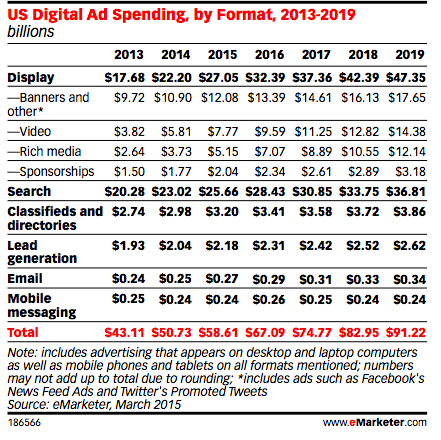
Total ad spending on display and search was nearly similar in 2014. Yet, by 2019, display ad spending is expected to be nearly 28% higher than search. This should be a surprise for most marketers. After all, wasn’t display supposed to be “dead”?
The reason for display’s revival is simple: remarketing.
Remarketing – showing people who’ve visited your site ads as they surf across the web – is booming. As data shows, more and more marketers are ploughing money into remarketing.
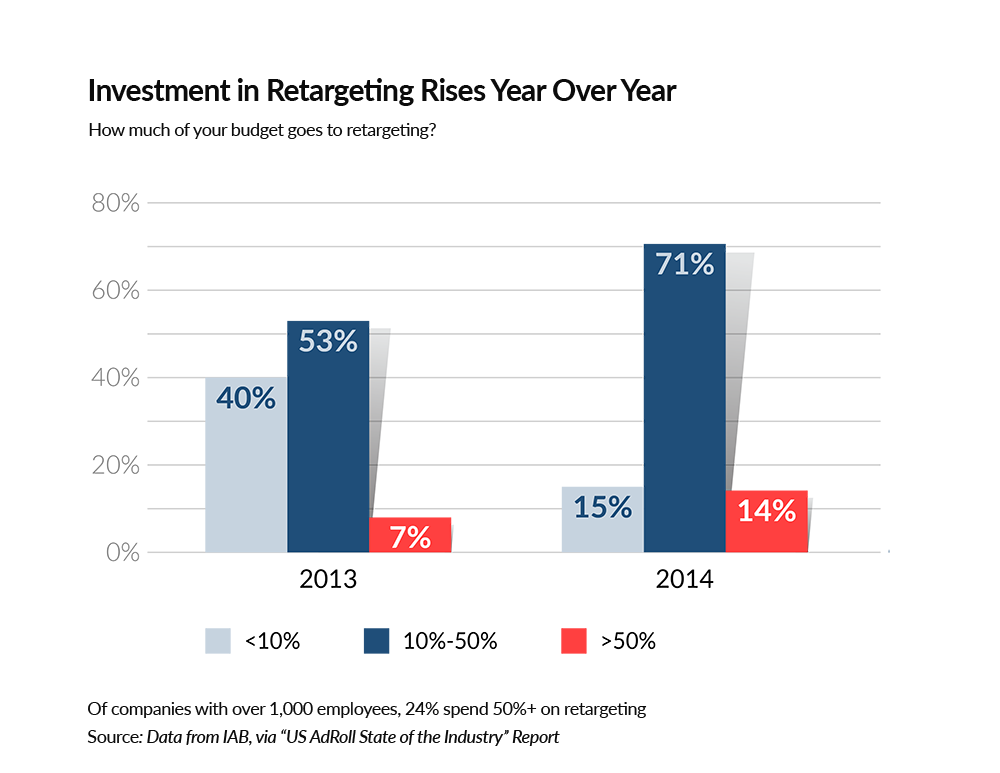
This higher spending isn’t accidental – conversion rates actually increase the more a customer sees an ad.
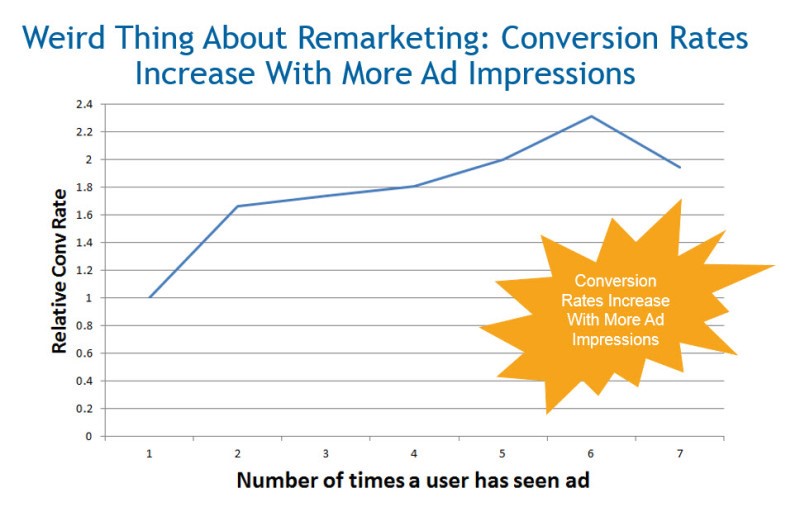
Your CTRs may decline over time, but people who do click on your ad after seeing it a couple of times, become twice as likely to convert.
For B2B marketers, remarketing is particularly important. As any sales veteran will tell you, it takes 6-8 touches to generate a viable lead. Remarketing is essentially a digital version of these multiple touches.
In 2018, we predict that remarketing will become the engine that drives lead generation. Marketers will continue spending money on remarketing platforms to get their offer before warm prospects and turn them into qualified leads.
How To Use This Trend
Setting up a remarketing campaign isn’t very difficult if you have some existing customer data. For instance, if you have an email list of people who had clicked through on an offer without buying anything, you might create a Facebook custom audience to show them a discount coupon.
Similarly, you might have a separate custom audience for people who had read 2 or more of your blog posts without signing up for any lead magnet.
If you have existing user data, you can start a remarketing campaign using these platforms:
– Google Ad Remarketing: Google’s remarketing solution that works from inside AdWords. All you need to do is add the remarketing tag to your website, build your ads, and set up your campaign. The only downside is that it is limited to Google Display Network and doesn’t offer any Facebook retargeting options.
– Facebook remarketing: The concept is similar to Google Remarketing, but there are few key differences with who you can retarget; customer list, website traffic, app activity, and engagement on Facebook.
– AdRoll: AdRoll works with Facebook, Google, Yahoo and Microsoft, allowing you to reach a majority of your audience. Like Google remarketing, AdRoll takes cares of all technical details, from customer segmentation to geo-targeting and more.
– RetargetLinks: Here’s a new term that you may not have heard before, Link Retargeting. Link Retargeting is a technology pioneered by RetargetLinks. The way it works is simple; you create a short link, share it on social media, emails, or blog posts, and anyone who clicks on the link will see your banner ads. (Shout out to Sujan Patel for introducing us to this technology)
[Content Marketing Trend #2] Personalized Content Experiences
Personalization, aka one-to-one marketing, is the key to delivering delightful customer experiences.
Consider this: you visit a landing page and enter your name and email to download an eBook on social media marketing.The next time you visit the same site, you’re greeted by name. Not only that, you are also shown more eBooks related to social media marketing.
This is the digital equivalent of the maitre’d at your favorite hotel greeting you by name and ushering you to your favorite table – it’s personal, intimate and helps you stand out in a sea of me-too competitors.
It’s kind of obvious but we predict that in 2018, we’ll see more and more marketers push towards providing highly personalized experiences.
The research backs this up:
– In a survey of 1,100 digital professionals, Monetate found that 94% believed personalization was “critical to current and future success”.
– Personalized lead nurturing leads to a 20% increase in sales opportunities from leads.
– Personalized account-based marketing converts 4x higher than generic marketing
In another survey by Forrester, 92% of marketers said that interest in personalization had increased in their companies.
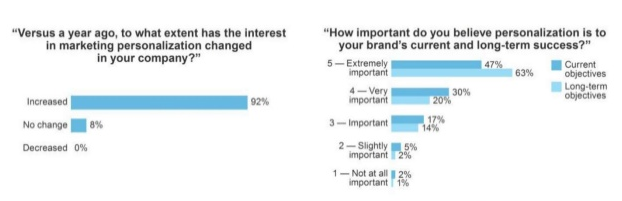
It’s not just marketers who want personalization – your customers demand it as well. According to a research from Invesp, 53% of online shoppers believe that personalization is valuable and up to 57% of shoppers are willing to give away their personal information in order to benefit from personalization.
How To Use This Trend
Personalization depends heavily on data. The more you know about your customers, the more personalized messages you can deliver.Start by collecting essential data from your visitors. If you’re in B2B, this might be:
– Name
– Email
– Company URL
– Company Size
– Department Size/Budget
– Designation
You don’t have to collect all this data from the get-go. Start by targeting the “low hanging fruit” of client data – names and emails. Most visitors will be happy to share these with you in exchange for compelling content (such as an eBook).
Once you have this basic data, start a lead nurturing campaign where you offer leads access to great content in exchange for more data.
Say, in your first lead nurturing email, you might offer leads who’d downloaded a social media playbook a 1-hour social media marketing webinar. To sign-up for this webinar, leads need to enter their company size, URL and designation.
By breaking up data collection into multiple steps, you build trust, thus removing a lot of user resistance and reducing the negative impact on your conversion rates.Once you have some data, plug these into high-impact sections of your landing page, such as CTAs.
Another way would be to show different content for different users.
Here’s a real-life example; Northeast Nursery, a business using Coredna, used Coredna’s personalization functionality to allow contractors to view and receive a special price on selected products. This can be extended even further to product personalization (where some users get exclusive access to products) or showing different shipping options or rates.
.png)
Anonymous users will see a price of $190.
Personalization is extended throughout the site with contractors being presented with specific banners and calls to action targeted to that audience.
[Content Marketing Trend #3] Brands Will Create More Super Niche Content/Sub-Brands
As they say, “Start narrow and grow wide”.
No matter what industry you are in, you will need to create niche content if you want to thrive in 2018. For example, consider how Nerd Fitness focuses on a niche in the fitness industry – “nerds who want to get fit”.
You can go even deeper and still build a large business. Examine.com, for instance, built a 7-figure business by selling reports on fitness supplements.
This is a natural result of market saturation and maturity. Marketers are creating more content than ever before. In fact, according to one Kapost survey, 70% of marketers said that they are creating more or “significantly more” content than before.
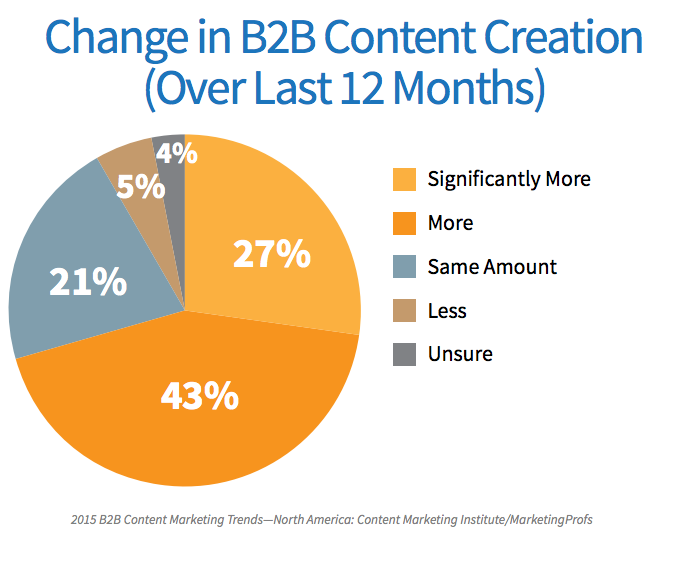
This incredible amount of content production means that to stand out, you have to either:
– Create content that is extremely in-depth or creative (which is expensive and time-consuming)
– Drill down and create content for a smaller niche
In 2018, with more and more marketers fighting for the same audience, we’ll see a shift towards super niche content. Instead of writing about “social media marketing”, you might write about “social media marketing for bootstrapped startups”.
How To Use This Trend
Start by identifying underserved sub-niches in your industry. If everyone is creating content about, say, bodybuilding, can you identify a couple of angles that have not been served well? Like, bodybuilding for over 40+ dads or bodybuilding for geeks.
This should be the starting point of your niche content creation process.
Once you’ve identified underserved sub-niches, modify your content calendar to accommodate these niches.
[Content Marketing Trend # 4] Content Will Adapt To Natural Language Search
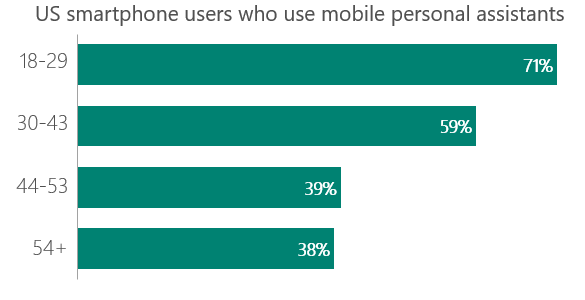
According to Gartner’s predictions, we’re moving into a world of screen-less search. This is mainly due to voice search. You might even say that these predictions are conservative. After all, voice searches already make up 20% of all Google searches on mobiles.
Even more important, younger people – your future customers – are far more likely to use voice search. According to one study, 71% of 18-29-year-olds are using voice assistants compared to just 39% of 44-53-year-olds.
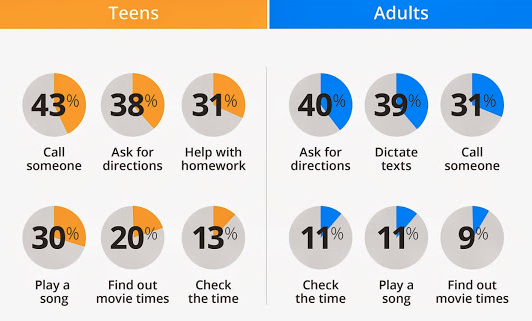
Younger people also use voice search very differently than older users. According to one study, 31% of teens use voice search to get help with homework.
At the same time, sales for voice-activated home assistants, like Amazon Echo and Google Home are skyrocketing. According to one estimate, Amazon Echo Alexa alone could add $11 billion to Amazon’s revenues by 2020.
The trend is very clear: we will be speaking more and more to Google Assistant, Alexa and Siri in the years to come. You can already see this in the way Google highlights answers to some questions at the top of the page:

How To Use This Trend
Since the way we speak is very different from the way we type, your content needs to adapt to natural language search. Instead of focusing on keywords, you need to focus on answering questions the way a human being would.
Which is to say, instead of writing about “best small business marketing tools”, write about “What are the best marketing tools for small businesses?”
Here are a few things you can do:
– Write complete, full-sentence questions and answers in your articles, rather than breaking it up into several sentences.
– Use long, specific phrases in your titles and headers.
– When determining your target keywords, keep in mind the conversational nature of voice searches. Try to target longer, naturally phrased keywords.
– Since a majority of voice searches come from mobile, make sure that your site is mobile-friendly.
– For local “near me” searches, make sure that you have optimized natural language content.
– Use Google Sitelinks, rich snippets, etc. to help Google find the right answers for its Knowledge Graph.
By combining these, you’ll increase the chances of your content appearing at the top of the search result. This will not only get you more traffic to your website but also make your brand more visible.
[Content Marketing Trend #5] There Will Me More Bite-Sized Content
There’s been an arms race of sorts among marketers to create longer and longer content.
As Orbit Media’s survey of 1,000 bloggers points out, the average length of a blog post has been rising steadily over the years.

This increase isn’t accidental – longer content does rank better in SERPs, as Backlinko’s study shows.
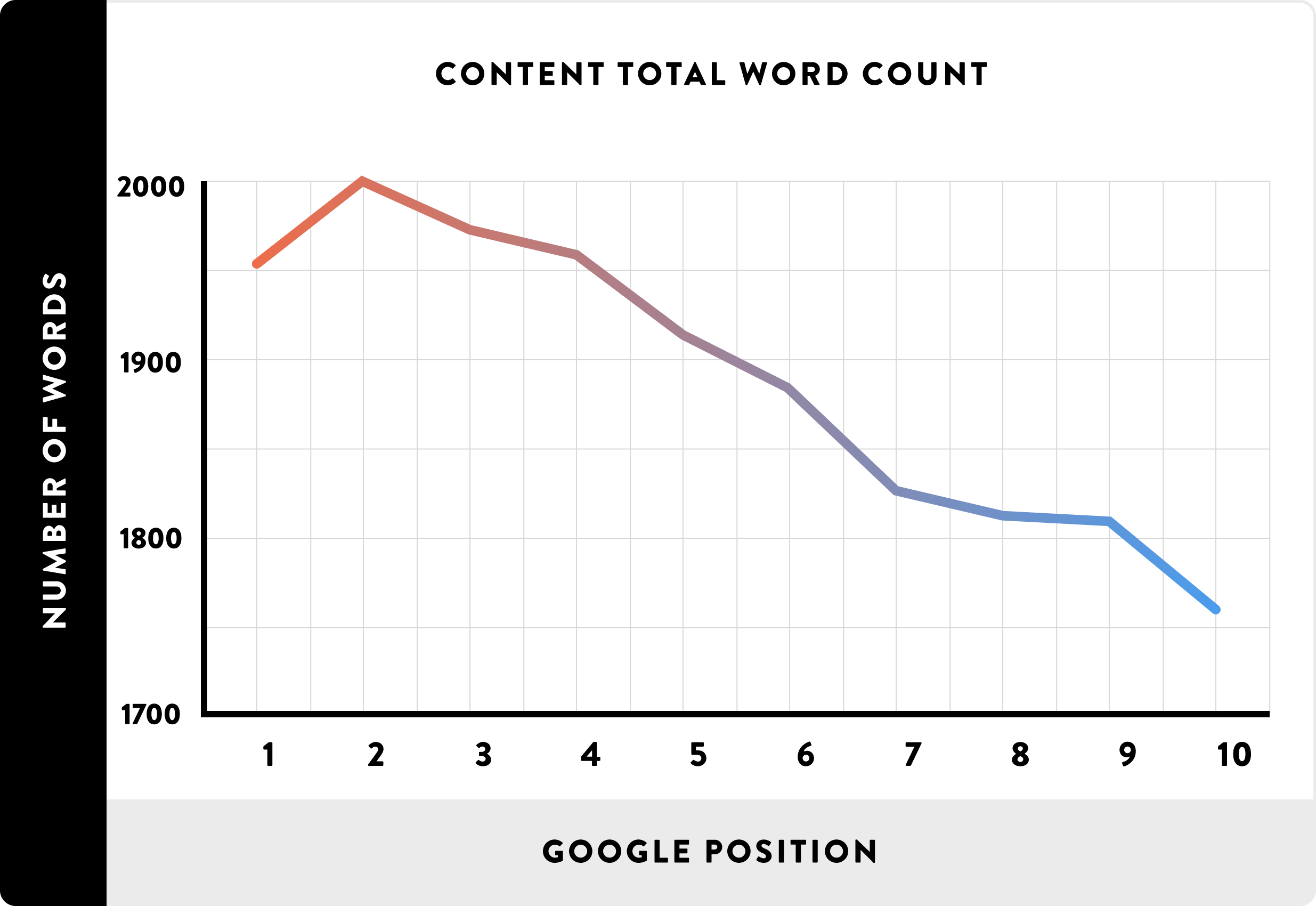
This is all well and good if your intention is to rank at the top of SERPs, but with social driving more and more traffic than search, lengthy “epic” content leaves a majority of your visitors in the cold and not to mention the attention span that is “shorter than goldfish” deal.
In fact, if your target market is millennials, you are more likely to get positive ROI from shorter, visually-rich content. As per one study of B2B buyers, millennials prefer videos and infographics (59%) for making decisions, while older buyers prefer in-depth whitepapers (78%).
I predict that we will see a “return to roots” as marketers give up the arms race for longer, fluffy content and create shorter, bite-sized content people actually want to read. Not every keyword or topic deserves a 3,000-word blog post; some ideas are better communicated in 200 words and a relevant image.
How To Use This Trend
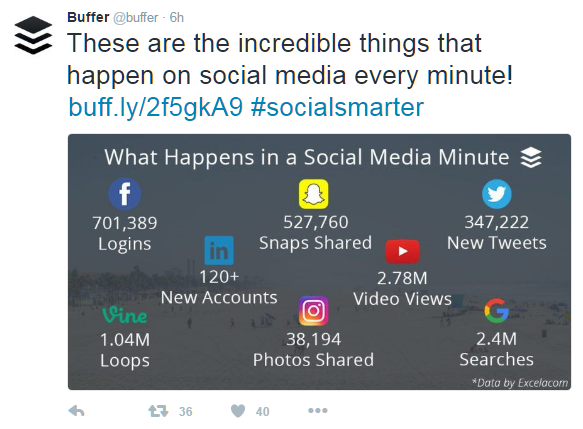
Instead of creating long-form content for every topic, mix it up with a combination of long and “snackable” content.Think of tweetable graphics like this:
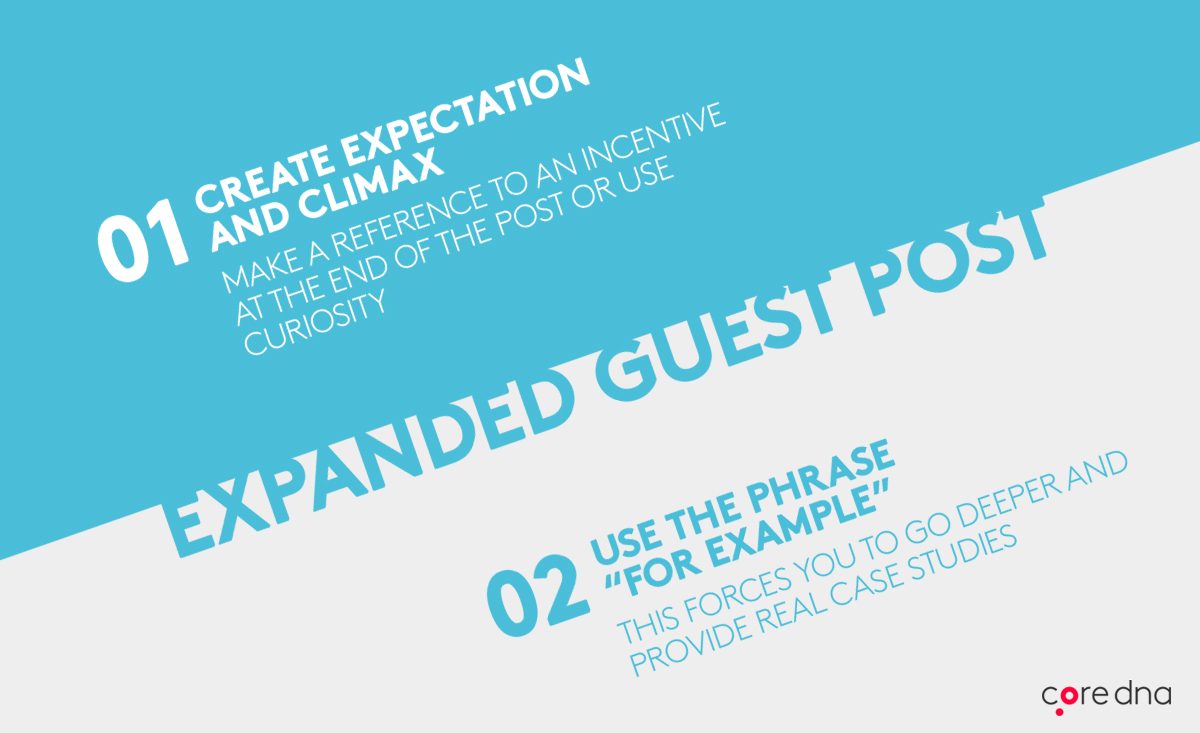
Or sharable in-post graphics like this from our how to grow your email list post:
Your objective should be to reduce bloat. Whenever you’re creating any content, ask yourself: does this require 1,500 words? Can you condense the content into a simpler article or graphic?
[Content Marketing Trend #6] Influencer Marketing Will Change
Influencer marketing has been a marketing staple for over half a decade now. The reason is simple: influencer marketing works.
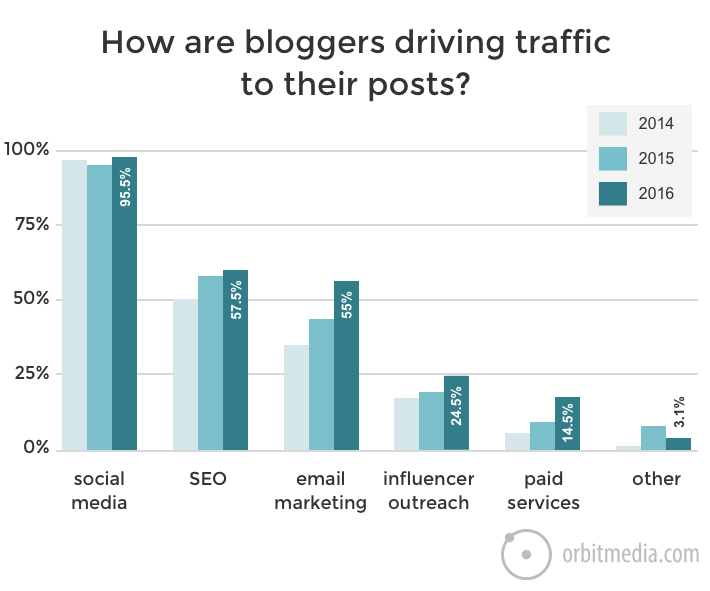
According to a report by Nielsen, 92% of people trust recommendations from individuals (even if they don’t know them) over brands. As per Twitter and Annalect, Twitter users report a 5.2X increase in purchase intent when exposed to promotional content from influencers. A blogger survey by Orbit Media found that it’s become more and more popular for driving traffic three years in a row:
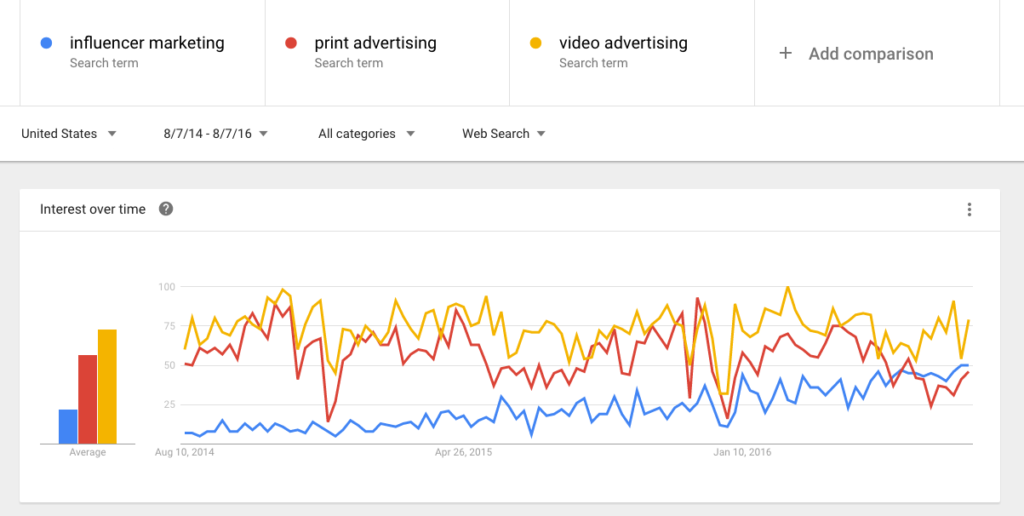
Even Google Trends shows a steady increase in influencer marketing over the last few years. In fact, in terms of search interest, it seems to be closing the gap with video advertising.
While the importance of influencer marketing is unlikely to change, what will change is the way businesses use it.
I predict that instead of going wide, we will see businesses going deep with influencer marketing. This means fewer “100 blogger roundups” and more intimate, in-depth interviews and analysis, like this Grow & Convert interview with Sol Orwell.
This isn’t just a bunch of questions and answers. Instead, it’s a close look at a business with insight from the founder himself. Think of it as a written version of a Mixergy interview.
The genesis for this trend lies in the fact that:
– Readers are sick of reading lengthy roundup posts with shallow, regurgitated insights.
– Readers want more authentic stories and actionable knowledge.
Expect more pieces like Jason Quey’s interviews with Nadya Khoja and Len Markidan in 2018.
How To Use This Trend
Instead of aiming for volume, identify influencers with whom you share the same brand values and audience. You want to leverage their authority and readership to promote your brand (and vice versa) while also crafting meaningful relationships.
Your key focus should be “collaboration”. Instead of doing a simple interview, collaborate with influencers to create content that speaks to your and the influencer’s audience.
Start by:
– Identifying key brand or product influencers, either manually or through a platform like TapInfluence.
– Creating a marketing campaign directed at those influencers.
– Creating a secondary marketing campaign for the influencers to drive greater awareness to a larger set of target consumers (such as a snackable content from an interview/analysis).
– Track key metrics relating to reach, sales and brand awareness.
[Content Marketing Trend #7] Customers Would Expect Complete Transparency
Consumers are growing tired (even weary) of brand advertising. Millennials and all consumers, in general, have always preferred transparent companies. However, going forward, old tactics might not work. We call them tactics because consumers are now starting to distrust the promises and choice words which have been used in the past to reflect transparency in an organization. For instance, according to Digiday, claiming you’re “green”, brand advertising, corporate support, and giving to charity won’t be enough. “People’s BS detectors are high,” warns the publication.
In the past, brands have been weaving this into neat “cause marketing” but the post notes a common criticism facing cause advertising: That it’s too heavy on marketing because usually only a handful of the brands who claim it actually wholly embrace the causes.
“With every passing day, it’s getting harder and harder to pull the wool over people’s eyes by trying to create meaningful brand love with disconnected causes — as it should,” says Jim Moriarty, director of Brand Citizenship. “We all crave authenticity. Brands can and should change the world. And the best way to do that is to initiate, support and amplify causes that are connected to the brand’s business and mission.”
Consumers are growing weary of that and they see it as desperate at best.
This 2015 Global Trust in Advertising survey by Nielsen shows where consumers are placing their trust.
.png)
Chances are that it will hold true in 2018.
In fact, going forward, brands will need to be even more transparent. As the market grows, consumers are increasingly feeling a lack of authenticity when they hear from brands as compared to their peers.
Granted, there’s growing opportunity for influencer marketing and endorsements. However, without first cultivating a relationship with the cautious consumer, this might end up being wasted effort.
How To Use This Trend
With bodies such as the Advertising Standards Bureau (ASB) and the Federal Trade Commission (FTC) out to protect the already cautious consumer, a close evaluation of the transparency, disclosure, and general compliance with advertising rules is necessary.
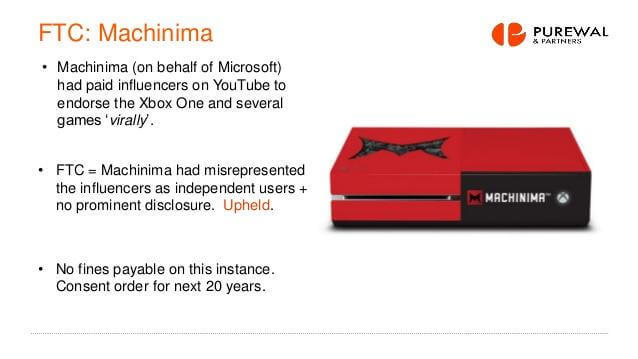
To illustrate here’s what happened to Machinima when it failed to adequately disclose paid endorsements to the YouTube influencers that produced content for the channel.
To ensure this doesn’t work against you:
Ensure All Your Content is Fully Transparent
Your content should fully disclose your partners and those you’re promoting. For instance, you might use words and phrases like, “Thank you, Brand X, for making this possible”, “Working with Brand X”, “In association with Brand X”, etc. All this to let the consumer know that there’s someone else involved in the promotion.
Always Be Up-to-Date With The Latest Regulations
Read up on the different measures taken by such consumer protection bodies to ensure compliance It’s the only way you know what’s required of you as an advertiser to avoid penalties.
[Content Marketing Trend #8] Videos Will Be Even More Important
Video will continue its rise in the years to come.
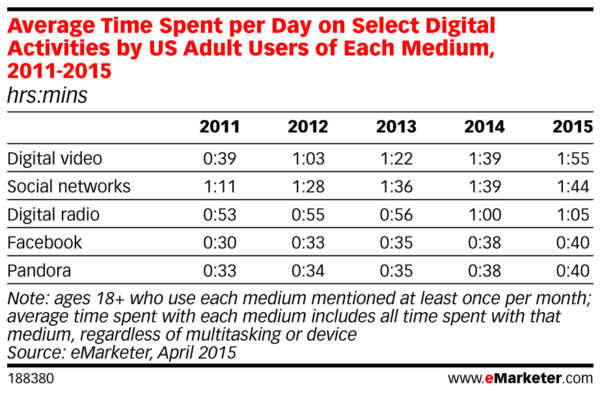
Between 2011 and 2015, digital video consumption grew from an average of 39 minutes to 115 minutes every day.
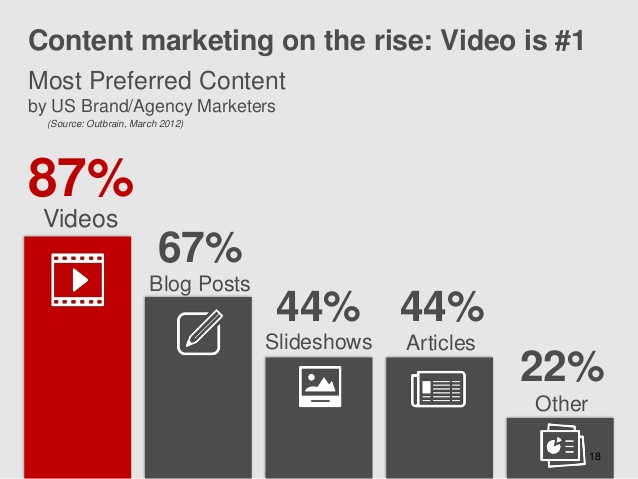
According to Cisco, by 2017 video will account for 69% of all consumer internet traffic. Video on demand content alone will be three times by next year. Among brand marketers, video continues to be the most preferred content type. According to an Outbrain survey, 86% of marketers prefer video.
That’s not all – how people view videos is also changing. A few years ago, vertical video was virtually nonexistent. Now, 29% of all mobile video viewing is vertical, thanks to the rise of Snapchat.
The trend is clear: if you aren’t investing in videos in 2017, you are missing out.
How You Can Use This Trend
Start by directing a larger share of your content marketing budget towards video. This doesn’t have to be production-grade video – something as simple as a behind the scenes clip or a video of your CMO sharing insight is a good place to start.
You can use a tool like Showbox to make video production significantly easier and cheaper.
At the same time, invest in newer video formats where you have a built-in audience such as Boomerang by Instagram or Facebook Live video. This will significantly ease your video distribution issues.
For instance, Gary Vaynerchuk’s regular “Ask Gary” live streams on Periscope regularly have 5-6k simultaneous viewers.
By sharing on Periscope, Gary Vee takes advantage of Periscope’s close integration with Twitter to reach his existing audience of 1.35M followers.
[Content Marketing Trend #9] Embrace Live Video
Back in 2016, the digital world took note of the rapid growth of live video and over the past 2 years, this has only intensified. Currently, 80% of consumers would rather watch a live video than read a blog post. In a survey conducted by Livestream, 82% of the respondents said they preferred tuning into a brand’s live video to reading its social media posts.
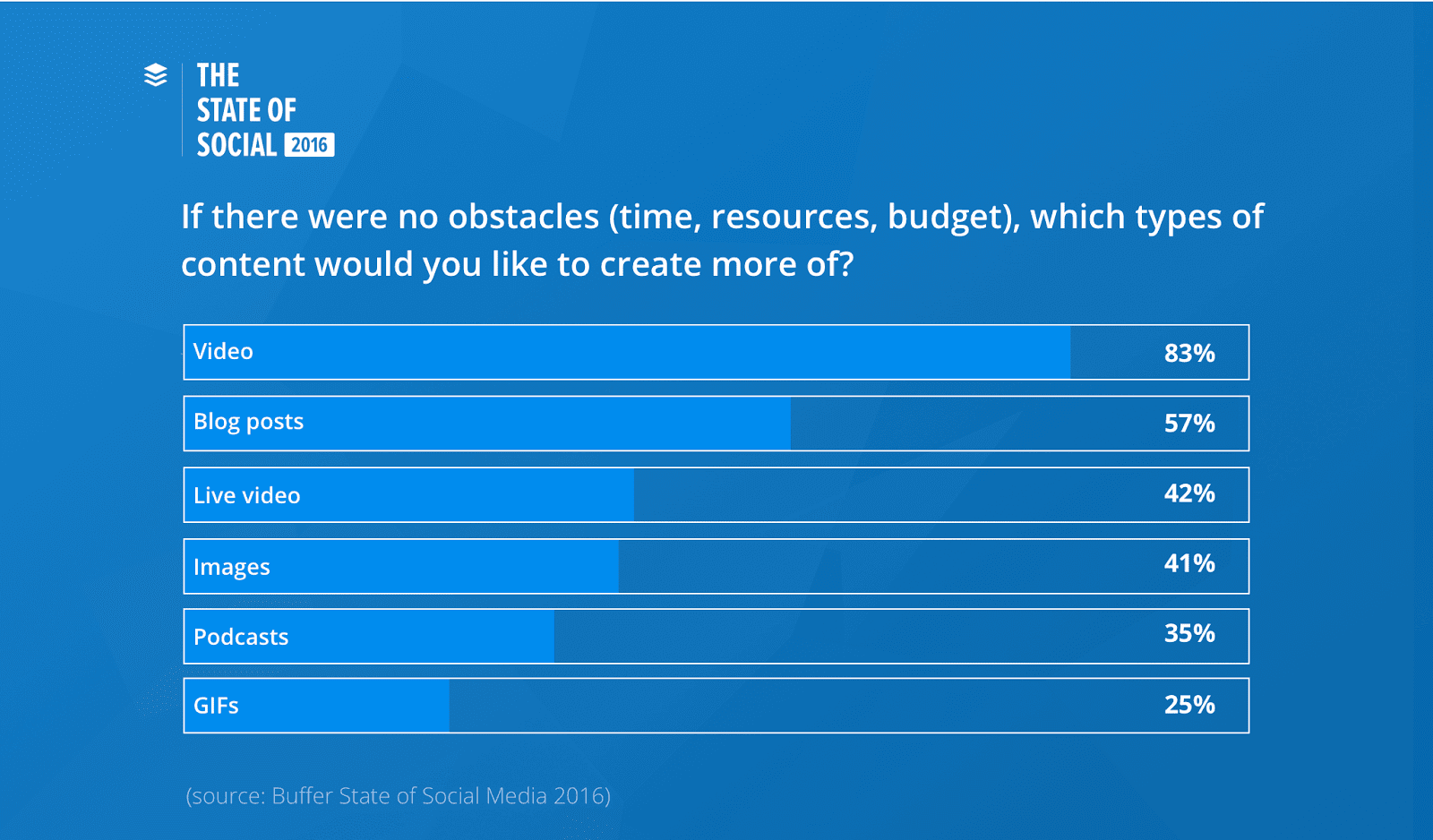
Facebook, one of the most used platforms for live video in 2017, reports that users are spending up to 3 times more time watching live videos than watching traditional/recorded videos. The comments are also 10 times higher during the livestream. Yet, while almost 60% of marketers are currently investing in live video, less than 15% are actively using the medium. However, marketers have been interested in live video for a while as a study conducted by Buffer in 2016 suggests that up to 42% of marketers had a particular interest in live video at the time.
If Cisco is right, video traffic will make up 80% of internet traffic by 2019.
Why has video (especially live video) become so popular with consumers? For starters, video has always been a very interactive form of communication on the internet. Live video has made that even better––it’s made it fun. Speaking of the growth of Facebook Live, Vibhi Kant and Jie Xu (both of Facebook) say,
“This is because Facebook Live videos are more interesting in the moment than after the fact.”
The same goes for other platforms.
Also, the fact that live videos are so raw/imperfect communicates the authenticity and human nature of the host creating an intimate communication channel with the audience.
It’s worth noting that high-speed internet growth, particularly the mobile internet, has also had a lot of influence on this growth. As the speeds are expected to grow further in 2018, with full deployment of 4G LTE and 5G networks, video is set to be as standard as voice on mobile.
How To Use This Trend
The best news about this trend is probably that you don’t need fancy and expensive equipment to reach your audience. For live videos, all you need is a smartphone that has a decent camera. For the coming year, we have a few ideas on how you can use live video:
Host Q&A Sessions
What better way to answer your customers’ questions than one-on-one? Just the same way you schedule Twitter chats, you can schedule a live video and let your customers know that at a particular time and date you’ll be answering all their burning questions and they might even be able to see your face.
Host Live Interviews
Instead of recording interviews with experts or customers, you can now host them live and let your audience see the unedited clips. For purposes of record keeping or sending them out to your subscribers, you can record and kill two birds with one stone.
Product Demonstrations and Unboxing
When done right, product unboxing can be a great boost to your marketing campaign. And as if unboxing on YouTube wasn’t enough, you’re now able to do it live! Why not snatch up that opportunity and give your audience an unboxing experience that will really stick with them?
Cover Events and Conferences
If your company regularly hosts conferences, trade shows, and other events, live streaming can be a great way to reach those among your target audience that didn’t attend in person.
[Content Marketing Trend #10] Changing Content Creation Process
The past few years have forced marketers to look at content marketing as a broad process which isn’t just about writing or recording videos. Thus, instead of simply churning out content, effective marketers are focusing on media publishing. Meaning, they don’t just hire more writers or create infographics about everything. They look at the process to determine the most appropriate format for different types of content.
And there are various formats: Blog posts, videos, infographics, images, etc. The list is growing by the day. If you’re not keen on understanding what works at particular moments, you’ll lose big.
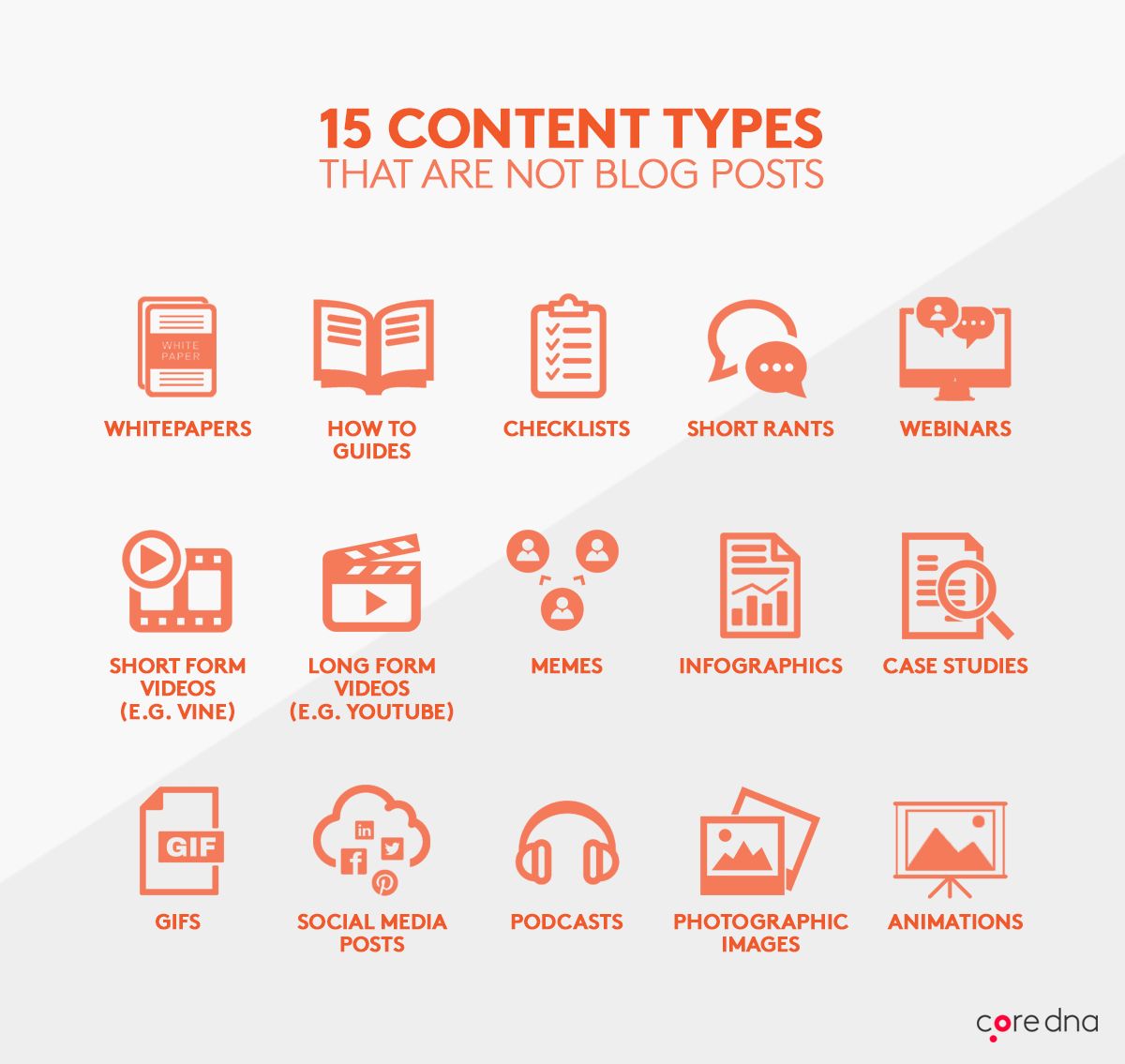
This change in content formats invites an equally diverse pool of professionals in the workforce. You need writers, video producers, graphic designers, audio producers, content optimizers and distributors, communication experts, and analytics experts. Show me an organization that has one guy for all that and I’ll show you one that will fail in the coming years.
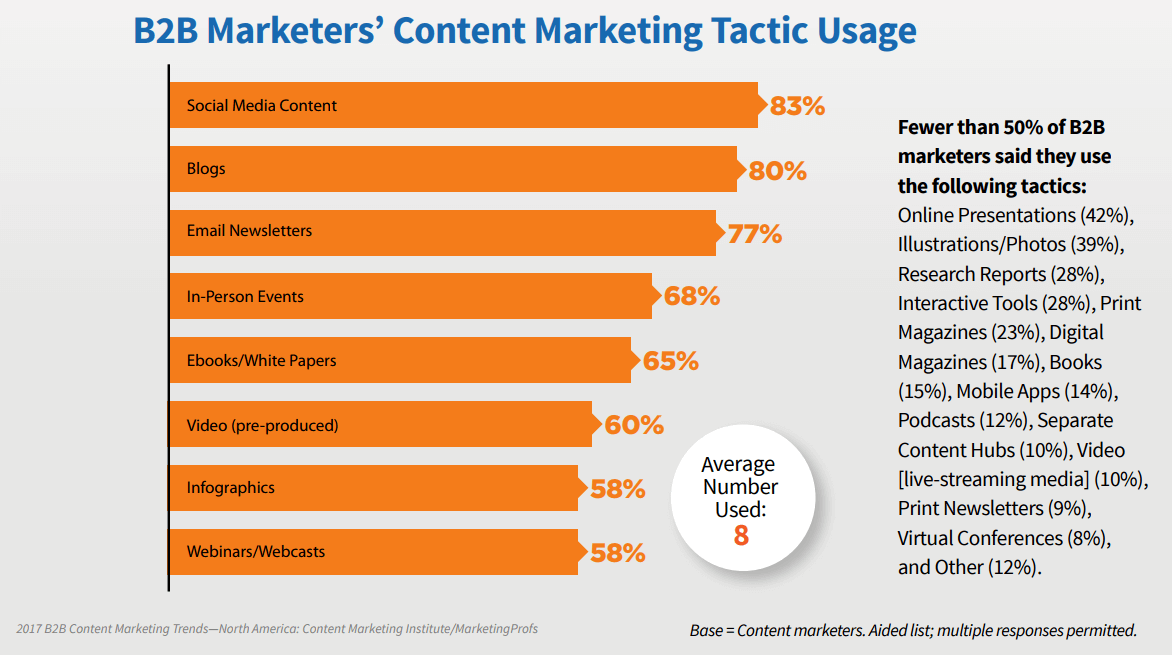
Successful organizations are using a range of tactics to drive different messages. Here’s is the latest data from Content Marketing Institute showing the spread of techniques used by some of the most successful organizations:
Another important thing to note is that consumers are no longer waiting to view the content on their screens. The Internet of Things (IoT) has made sure that content can be around in a way that doesn’t require us to use our hands or even eyes. Think of technologies such as Siri, Ok Google, and Alexa. These innovations allow consumers to have content in a call-and-response format allowing them to interact with content from brands on the go.
As we speak, a number of organizations are already using Alexa to share content with a wide audience that doesn’t want to always scroll and stay glued to the screen. For instance, through Alexa, the American Heart Association (AHA) can walk you through the process of performing CPR in the event of an emergency. Included therein are warning signs of a heart attack or stroke.
How To Use This Trend
The opportunities don’t just lie in a single industry. All you need to do is think of what your audience is looking for and figure out a way to infuse that into the technology so that they too are able to get insightful information the modern way.
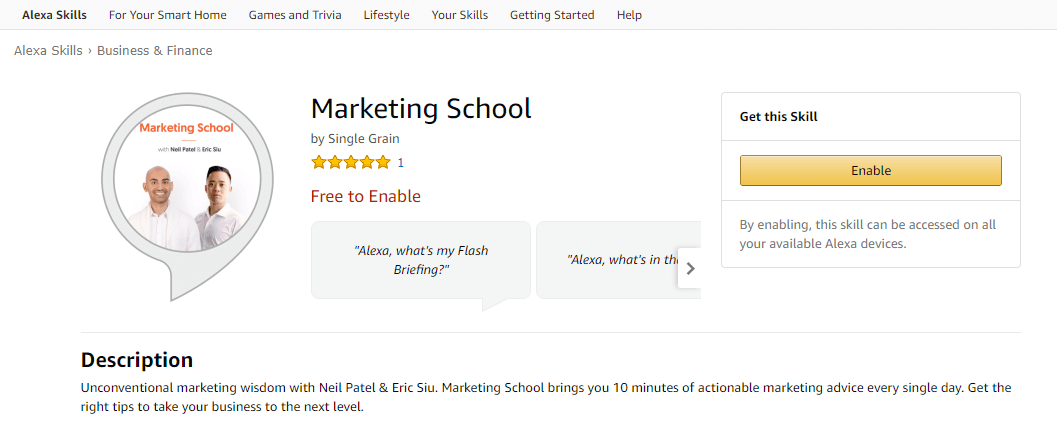
For instance, Neil Patel and Eric Siu have developed a simple Alexa Skill that will deliver 10 minutes of actionable marketing information each day and you don’t have to sit down those 10 minutes to get it. Alexa allows you to listen at any point in your day – just when you need it.
Understand Your Audience
Before you begin creating the different types of content, you have to first know what your audience needs and wants. Then figure out how to deliver it in a way that will give them the best experience.
Diversify
As a lone strategy, blogging is incredibly shallow. Going forward you need to create a range of content formats that accommodate the changing content consumption patterns.
Say No To One-Person-Does-All
As the process changes and more formats come to play, you can’t assume that your writers will do a graphic designer’s work. Similarly, you can expect the video producer to sufficiently edit your written content. Content production is now a process that needs to go through various stages before it can be successful.
A great example of a successful content creation process is Pixar. The CEO, Ed Catmull, explains the process the company takes to create Blockbusters saying, “Early on, all of our movies suck.” Easy for him to say right? However, he says that their ideas don’t begin perfectly. Rather, they start as “ugly babies” that are “awkward and unformed, vulnerable, and incomplete.” It’s an interesting 1,084-day process that you can read about on Wired.
Bottom line: The process is changing and only those who embrace and adapt to this change will survive.