What Can Winning Campaigns Based on Consumer Insights Teach Us?
Reverse engineering case studies on consumer-centric campaigns: game-changing advertising and marketing ideas powered by consumer insights.
by Alessia Clusini Oct 07, 2019
Are we out of touch with consumers? What are insights in advertising? Consumer Insights that powered winning marketing and advertising campaigns
Spotify: 2018 Goals
(picked by Jade Taylor, Content & SEO Account Director at Verb Brands)
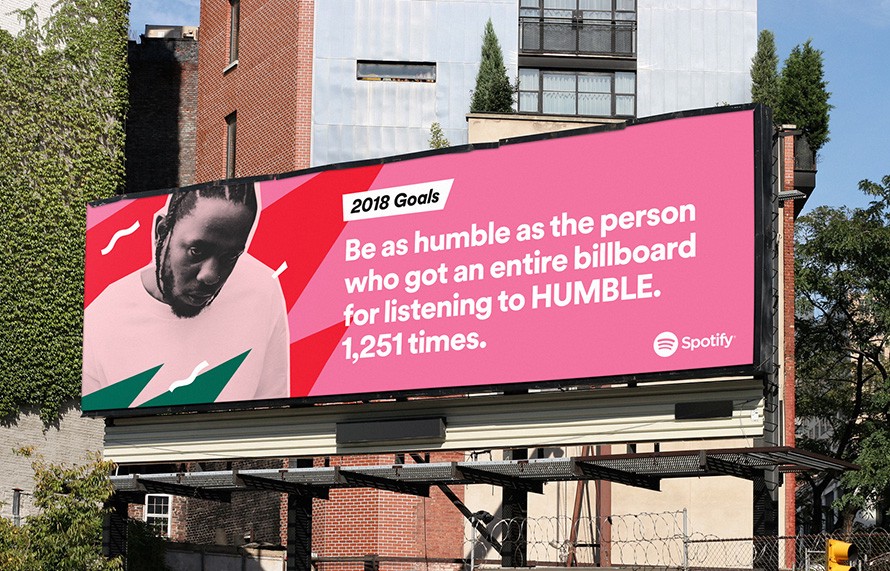
Consumer insight : The “insights” here are the actual campaign. Anonymous user data rearranged in a hilarious way and personal voice.
Action : Following the success of Thanks 2016, It’s Been Weird, where it poked fun at some of its quirkier users, Spotify did it again, only this time proposing new year’s resolutions.
The odd component comes back, as Spotify jokes about weird/funny habits of its consumers, plus it features some of the top artists on the platform and appears with geo-targeted OOH (out of home) messages.
The campaign was a success. Revenue tripled in Q1 of the year. They also saw a rise in subscribers, possibly due to the call to action launched during the campaign.
What should we learn from this?
How to talk about data on consumers. One thing is having lots of consumers’ data, another thing is talking about it. The superpower of Spotify is understanding its user base better than any other music provider thanks to ML and user behaviour tracking (that’s how they power their amazing recommendation algorithm), but this doesn’t mean that it’s a sexy message to share. In times of privacy awareness and easy backlashes, the Spotify team found a way to talk about data, making it funny and extremely shareable.
From an analyst POV, the type of consumer insights that Spotify published might not be representative of the whole consumers’ base (sometimes not even a niche), and that’s exactly its strength. It’s mainly based, in fact, on the outliers of a huge amount of data.…the weirdos. Which constitute much more interesting stories to tell than mere numbers.
So it does the job, as in: it makes people have something to joke about and share with the others, it makes them feel more connected to the brand.
But please, be aware that it doesn’t always go well. There’s a fine line between “understanding their consumers” as said about Spotify, and being “intrusive” and “tone-deaf”.
These nuances in the approach to consumer insights should be never taken in a superficial way: my advice is to try understanding the culture and the values of the people we’re trying to reach before launching something confidential out there. Money is certainly not music, and consumer behaviour/cognitive implications are very different across product categories and topics.
Leo Burnett / Always: Keep Going Like a Girl
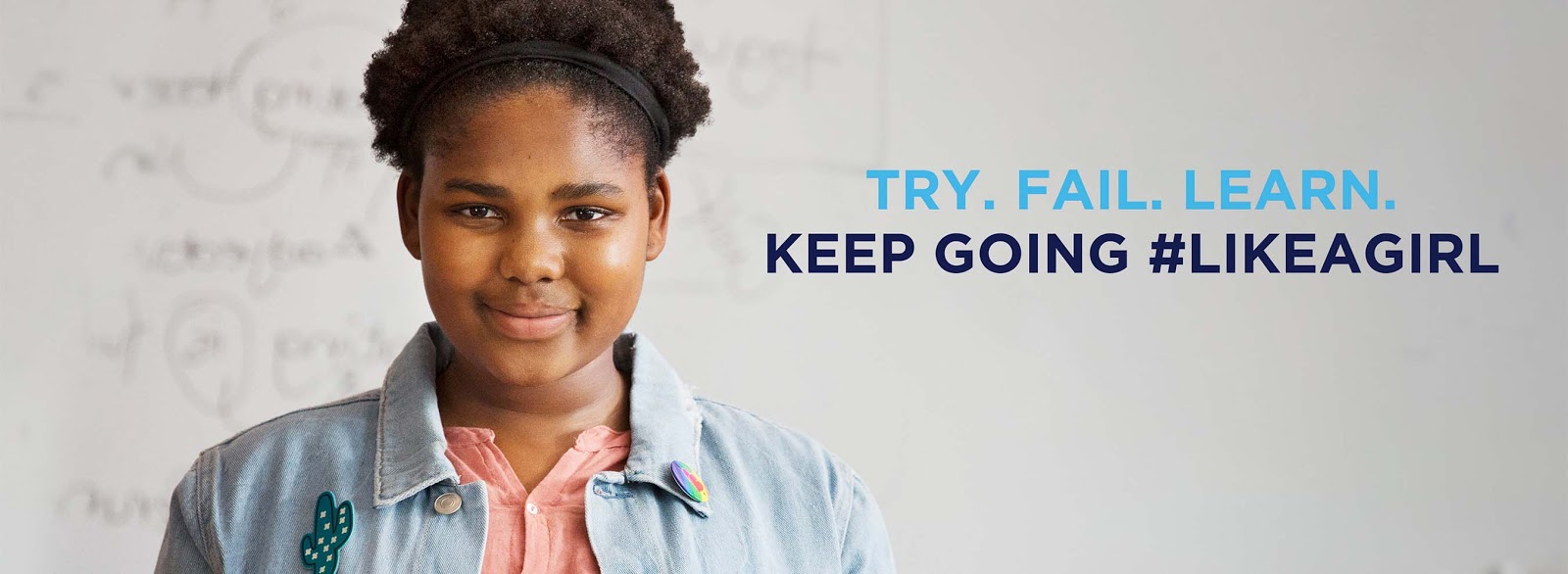
Consumer insight : At puberty, nearly half of girls (49%) feel paralysed by the fear of failure (based on a 2017 study among 1,000 UK women aged 16–24 years).
Action : The original #LikeAGirl social experiment launched in 2014 was the start of what Always calls an epic battle: changing the perception of the expression “like a girl” and boosting girls’ confidence all over the world.
Since then, Always campaigns became synonymous of young women’ empowerment and reached a huge quantity of audiences.
In 2017, #LikeAGirl campaign was tweaked by the “fear of failing” insight to encourage girls everywhere to embrace failure as fuel to build confidence & Keep Going #LikeAGirl.
What should we learn from this? Keep searching for what matters.
Consistency is key in a branding strategy, so the best action we can take here is to keep studying the audiences, their needs and worldview, what matters for them, why they make specific choices, who and what influences them.
If I were working at Always, I’d wonder how girls communicate and gather in groups, as I've acknowledged through research that the social factor is extremely important at that age, almost for defining the self.
Wieden & Kennedy London / Three: Holiday Spam
Consumer insight part 1 : By 2015, Three had grown to 9m customers, especially through focus on data deals and low prices. But the company was suffering the highest churn rate in the category, so they decided to understand better their consumers in order to
• make them loyal
• acquire more loyal consumers
• improve customer lifetime value
They segmented the customer base and then worked across the segments to discover common insights regarding the mobile network world. Here is what they found out:
1. The whole category was mistrusted and badly perceived: people think that mobile networks companies are as bad as politicians
2. How did the customers feel? Bad! They were largely feeling treated unfairly
3. One particular pain point came up again and again: all consumers of all brands were being charged extra for roaming abroad — using their phone to make calls, send messages or access the Internet. As a result, only 25% of them used mobile data abroad, with 25% turning their phones off altogether for the duration of their trip.
Action 1 : Strategy/marketing. The marketing direction decided, based on the rich consumer insights gathered, to take a challenger brand stand and change a common mobile networks practice that was affecting all the consumers: the extra-charges abroad.
They decided to let people use their phone abroad at no extra cost so that consumers could “Feel at Home” and Three could be market-first in something they deeply cared for. When Three launched the service, the positive reaction was said to be “overwhelming”. So Three decided to keep gathering insights.
Consumer insight part 2 : Observing the consumers’ behaviour in using the new offer, Three has seen not much calls and text but an increment in data usage of 71%.
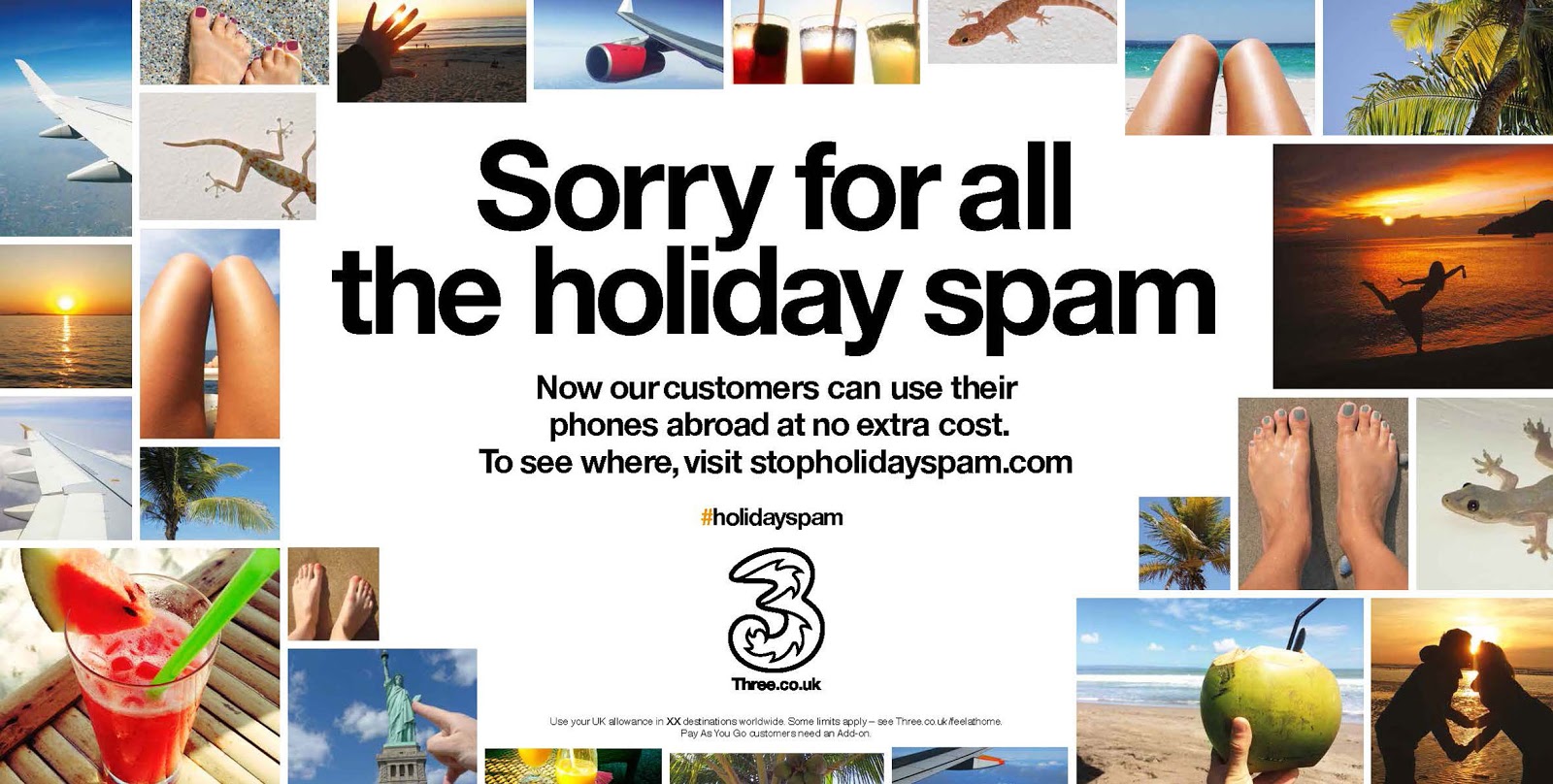
People were mainly using their phones’ data to publish photos of their holidays on social networks. A huge social phenomenon called by the media “braggie”.
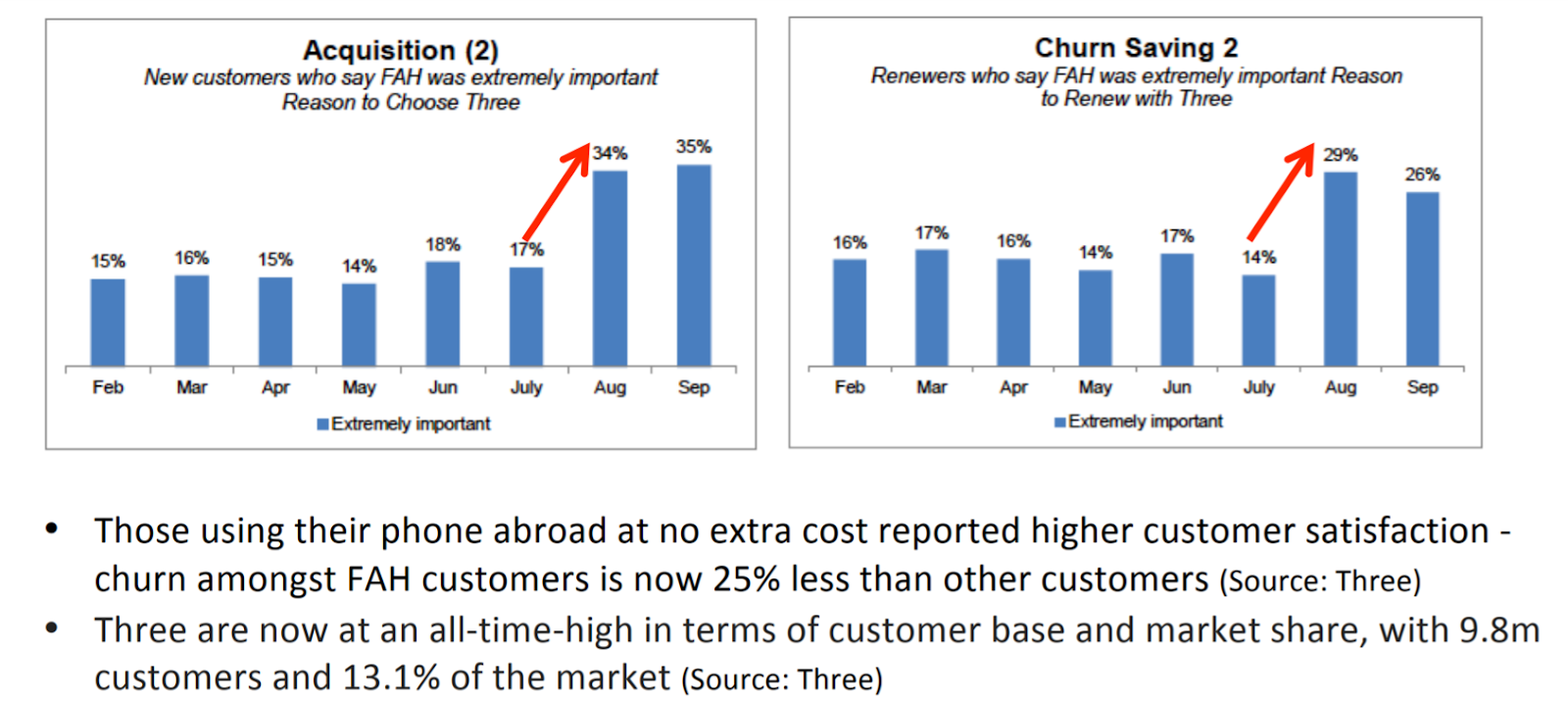
Action 2 : Marketing/communications So next step for the mobile company was to playfully embrace its consumers’ behaviour: Three, in fact, encouraged consumers to publish their photos using the #holidaybraggie hashtag, and then created a campaign to talk to the people affected by this ‘Holiday Spam’. The campaign led to a 90% increase in Three’s social conversation volume, higher brand metrics and customers saving a collective £2.7bn on roaming charges. Customer acquisition and churn saving were doubled among the new consumers. This resulted in doubling down the investment for a second campaign based on the same strategy.
What should we learn from this? Gain consumer insights to struck a chord with consumers.
Three’s strategy from data to creative messages seems to have an ideal structure:
1. Identify the business problem in the data— Customer lifetime value, churn rate, NPS…
2. Gather data to answer that query
3. Cluster the data and try to spot patterns, correlations, signals and outliers
4. Form strategy based on consumer insights
5. Be extremely creative, memorable
6. Test
7. Deeg deeper into the data, and repeat