The haunting chorus from Ghost Town by The Specials is wailing round my head like a coronavirus ear-worm.
I’m catastrophising about all manner of things; the future of humanity, whether I’ll ever find fresh yeast, and how the outdoor industry is coping with very real ghost towns all over our isolation nation.
“What does Covid-19 mean for OOH, a media that relies on people being, well, out of their homes?”
Having spent the past three months talking about the brilliance of out of home with my pod-partner Dan Dawson on our podcast, Behind the Billboard, the OOH world is very much front of our minds. What does Covid-19 mean for OOH, a media that relies on people being, well, out of their homes, when the government is actively telling them to stay indoors?
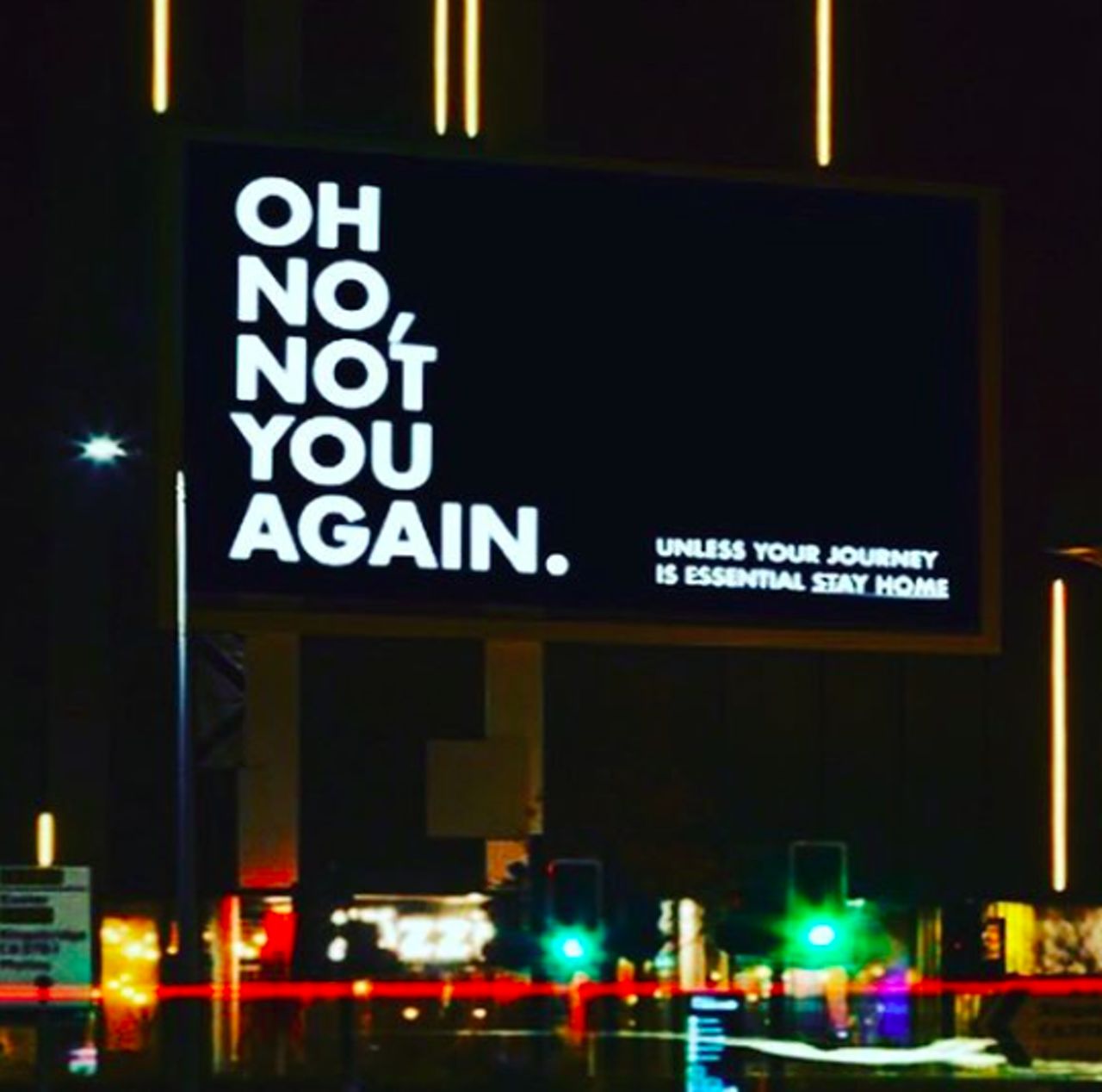
 Above: One of the billboards from MullenLowe London's Stay Home campaign.
“More than ever, amazing creative work will elevate media space and bad work will fade into the background.”
Dan, who’s day job is CCO at award-winning digital OOH production specialists Grand Visual, gives us a bit of insight: “With OOH going through its toughest quarter in living memory and global communities being asked to stay at home and away from public spaces, it feels there will be an even greater need for creativity.
There’s likely to be very high occupancy in the latter stages of the year on all OOH formats, traditional, digital and ambient. More than ever, amazing creative work will elevate media space and bad work will fade into the background. I expect to see more contextually relevant, mindset-sympathetic and consumer-centric copy than we’ve ever seen before… as well as advertisers being pushed onto formats that they don’t normally frequent.”
“Brands that behave thoughtfully or entertain in a witty way during this crisis have an opportunity to stand out.”
New formats are always an opportunity, just so long as you’re saying the right thing. Rosie Arnold, Co-Founder of Love/Fear agency, and creator of some of the most iconic billboard campaigns of the past 30 years, urges caution. “People not going out makes advertising feel slightly irrelevant, and spending money on advertising feel wasteful. It is tricky to create new work [but] brands that behave thoughtfully or entertain in a witty way during this crisis have an opportunity to stand out. I love the Tesco food love stories, it feels spot on. Also, the topical Guinness sofa ad and Netflix spoiler posters.”
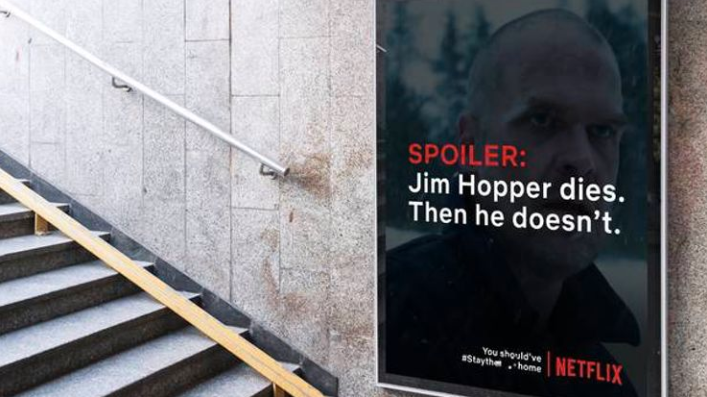

Above: One of the speculative Netflix's 'spoiler' posters from a pair of creative students in Asia
“It makes you think there’s something beautiful about our ability to find silver linings even in very dark times.”
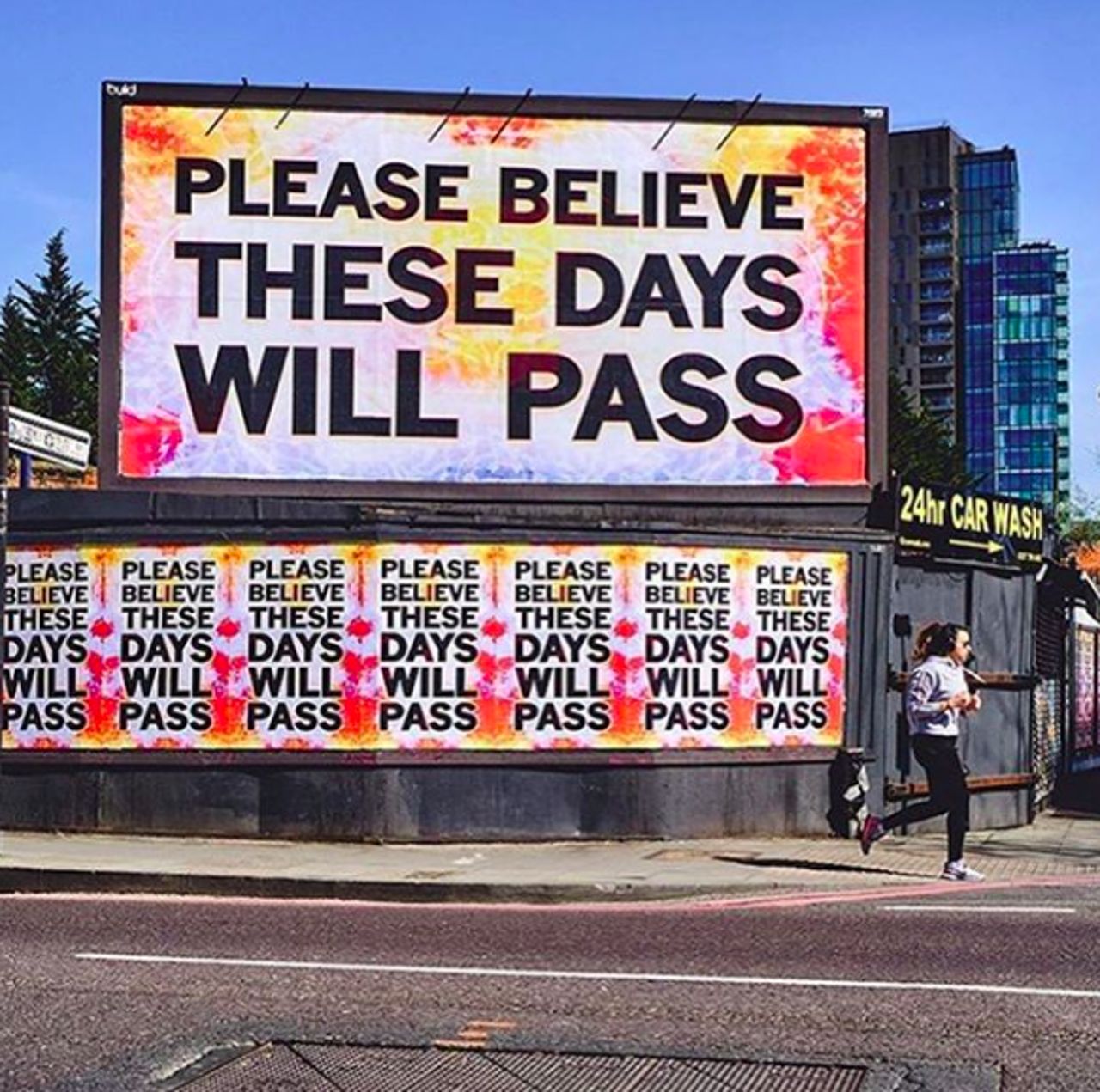

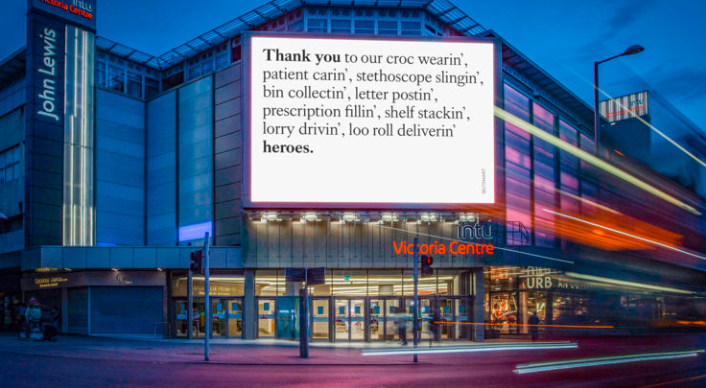
I’ve also seen Mother’s AdShel praising key workers in that nod to Dave Trott’s classic Pepsi end line, because people have tweeted them. And I’ve also seen that nice campaign telling you to stay at home because I saw them on Instagram.”
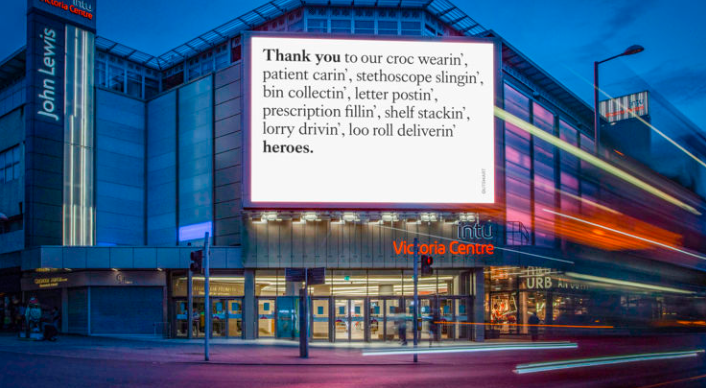


Three of Mother London's 'Grateful Britain' posters; the Queen's message to the nation;
and MullenLowe's Stay Home campaign encouraging people to stay indoors.
Rosie Arnold thinks outdoor will always outdo other platforms, no matter what the climate. “There is a beauty and power in posters that other platforms cannot offer,” she says. “The simplicity of messaging and the fact you cannot turn them off has long meant it is the media for changing opinions, often political, [and] it seems the perfect media to provide information and change behaviour.” AMV’s Riley concurs: “OOH is still a brilliant medium. If you use it well [and] if you create something with impact, it will get talked about, it will get shared, and it will have a life and a ROI way beyond its original budget. It was ever thus. Even more so in the time of coronavirus.”
Source : www.shots.net