With the exception of cinema, the out-of-home (OOH) sector was the hardest hit by the pandemic downturn. In the last quarter, the Advertising Association and Warc expenditure report showed spend fell 70% and Nielsen pegged it at 85%. Here, The Drum asks OOH bosses about their long road to recovery.
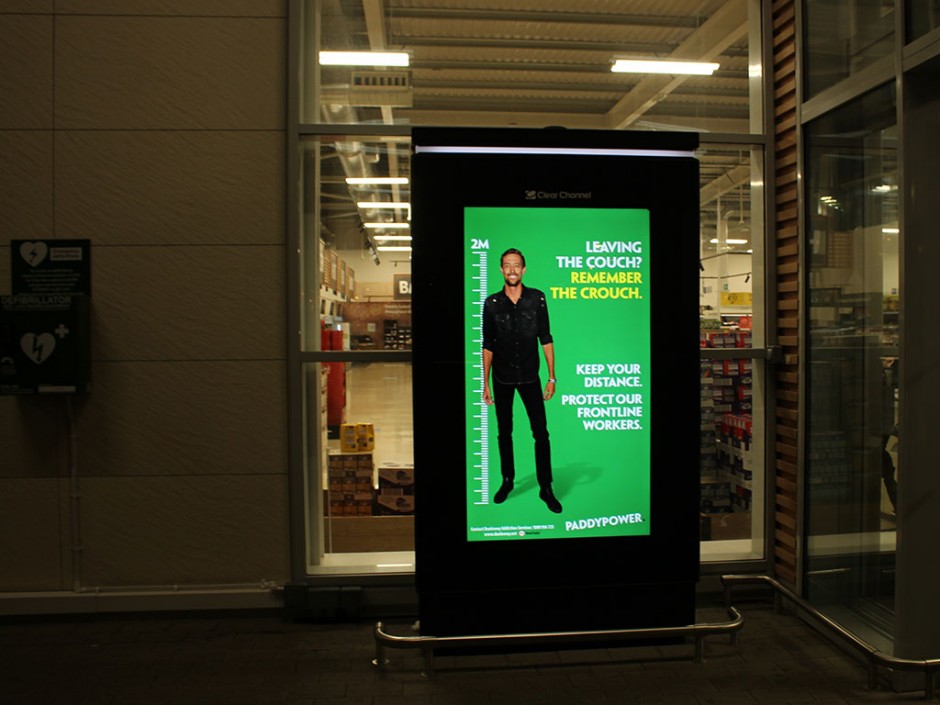
Billboards, or what specialists call OOH and DOOH (digital) ad inventory, relies on one-to-many impressions in high footfall areas. And in lockdown, that proved problematic. Lucrative city sites were ghost towns and marketing instead focused on personal and at-home devices where the public was spending more time.
Shelleen Shum, the forecasting director at eMarketer, says “OOH ad spend for most markets was negatively affected”. DOOH was hurt slightly less. But in Q3 and Q4, footfall is expected to increase and delayed campaigns to resume.
So, how have bosses at Clear Channel, Global and Posterscope adapted in lockdown?
Clear Channel
Justin Cochrane is the European chief executive of Clear Channel International, which operates half a million outdoor advertising panels across 31 markets. For him, it is all about flexibility from media owners.
“The worst thing you could do is try to cling on to clients. We accepted the fact that the audience disappeared and that we’d lose bookings. We were as good as we could be to clients.”
Globally, Clear Channel’s revenue was down 60%. In Europe it was slightly less, at 55%, and it was marginally less again in the US where some weren’t so keen on locking down. “The European outdoor business is much more city center focused whereas the US is more focused on highways,” Cochrane says.
Delayed campaigns are creeping back, however, and he says “Q3 is recovering quite well”. In context, its Q3 revenue losses are currently at about 30% down.
This week, Clear Channel is pushing its Radar client portal to Europe in order to help clients virtually map campaigns, whether that is aiming them at “18-34 year olds who shop at high-street fashion brands or parents who recently visited a supermarket“. Run in partnership with AdSquare, it is powered by 5% and 10% of the population’s anonymized mobile data, which is used to track footfall near Clear Channel’s billboards, bus shelters and street furniture.
Global
Global, the out-of-home and audio giant, had earlier this year rebranded its ad marketplace from the Digital Audio Exchange (Dax) to the Digital Advertising Exchange (also Dax). The platform now hosts around 1,000 DOOH sites, buyable through four DSPs. It promises to serve the creative to DOOH screens in “less than an hour”.
Dax now needs to convince buyers that audio and OOH can work in tandem, and that is the job of Oliver Deane, Global's director of commercial outdoor.
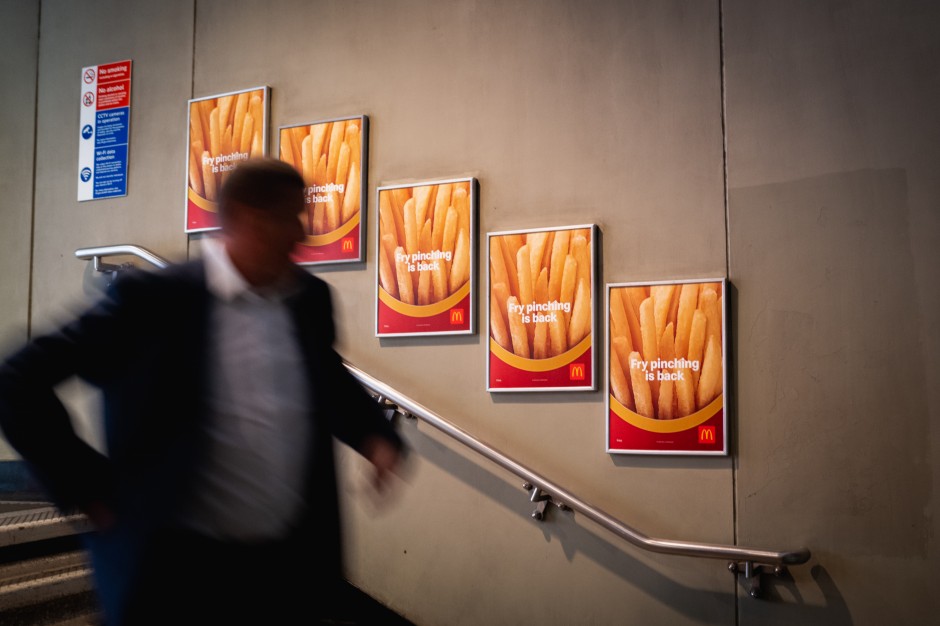
As for OOH strategy, Deane thinks McDonald’s is nailing it. Drive-through remained opened through most of the downturn and roadside and transport spots were vital to this awareness campaign.
“Advertisers are using DOOH quite well as a creative canvas to deliver very succinct clear messages to people. They’ve moved on from those samey Covid-19 ads.”
Posterscope
On the agency-side, out-of-home and location marketers Posterscope boasted billings in excess of $3bn – before the pandemic.
Managing director Glen Wilson says: “We had a global pandemic with the over-arching instruction of ‘don’t leave home’, which had a pretty seismic effect. The AA/Warc’s 70% spend decline figure will prove to be pretty spot on”.
OOH’s benefit is that it can reach a lot of people at once, which is helpful in an increasingly fragmented media landscape. The crisis will “accelerate” existing trends.
“The rise of digital out-of-home was driven by the media owners that built it, like progressions such as Ultravision and scrolling panels before. These let you sell your best sites more times. Digital has that, but with an increased quality of presentation.”
Posterscope is trying to sell clients on the broadcast potential of DOOH, with buys and creative that are automatically triggered “when certain conditions are met”. This could be weather, time of day, traffic, pollen counts (GSK campaign here), temperature, government-mandated lockdowns or even football scores.
Source : https://www.thedrum.com