Sometimes in marketing an idea comes along that is so simple and potentially transformational that it is easy to overlook, because its benefits seem so obvious that one might believe it already exists, or someone should surely have thought of it already.
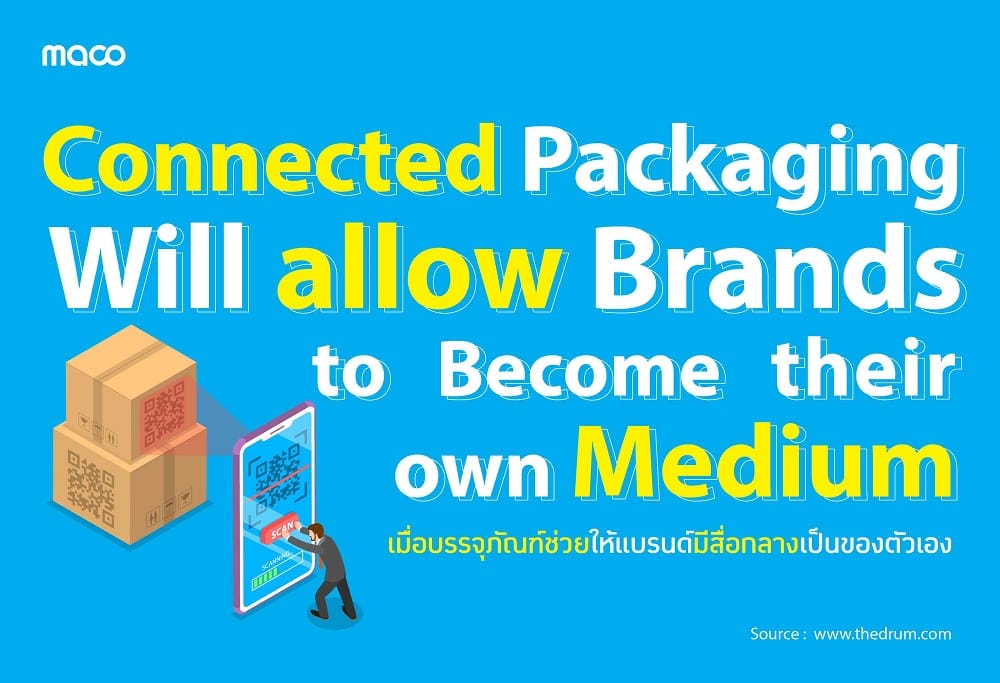
One such idea is Connected Packaging, which will – in essence – allow brands to become their own medium.
The concept of using a product’s own packaging to allow a brand to connect directly with consumers is not only genuinely disruptive, but timely and – obviously – sustainable. Advertisers are wrestling simultaneously with the tumult caused by a pandemic-driven change in shopper habits: the rise in direct-to-consumer retailing and new forms of distribution, the accelerated demise of so many of our bricks and mortar stores. Connected packaging is a potential solution to so many of the questions these developments throw up.
It has become possible partly because of the ubiquitous penetration of the mobile phone among consumers and partly due to the second coming of the once-derided QR code, previously dismissed as user-unfriendly. Add into the mix the creative possibilities that Augmented Reality-linked QR throws up, then the opportunity is clear.
Small wonder then, that some of the world’s most famous marketers like Kellogg, Unilever, Nestlé and Coca-Cola are looking at how to transform their own packaging. They can see the disruptive potential in data, creative and measurement alike. The chief appeal being that all three can be linked seamlessly and introduced without negative impacts on the consumer. In fact, there is a rare opportunity to bring joy through marketing – as packaging comes to life.
Data collection – without antagonizing the consumer.
Google Chrome’s decision to join Safari and Firefox in scrapping the third-party cookie is one of marketing’s most hotly-debated topics. Vested interests, notably in programmatic advertising, have spoken in apocalyptic terms of its impact. Fears of needing to breach brands’ “walled gardens” to reach consumers have some truth in them. However, connected packaging allows brands to reach consumers without the annoyance and concern so many of us feel about being tracked all over our digital activity by brands in which we have no interest. The data that comes via the QR code on a product a consumer has either bought or picked up to consider is by definition more “pure” and – crucially, frictionless in its collection. This first-party data allows for greater clarity on both purchasing and interactive behaviors.
Creative – a new, old medium
If both ticketing and testing prove the efficacy and ease of use of the medium, the marketing community will relish its creative opportunities, particularly via the marriage of QR and AR. The packaging of the future is a portable interactive poster. It has already seen advertising properties such as Tony the Tiger coming to life via the wave of a mobile phone over a Frosties box’s QR code in work created with Experience Is Everything for Kellogg. This could be seen as a return to the old sales promotion technique of inviting consumers to read the packaging to find out what might be inside the box and how to act upon it. But that is no match for today’s reality: an animated Tony on an AR video speaking to us directly.
Connected packaging also throws up opportunities for new sponsorship creative – crucially, without the potential consumer irritant of the digital pop-up or over-intrusive placement. It offers in-store and at-home partnerships between retailers and brands, bringing the retail environment to the home. And it allows for shelving itself to become a medium, whether real or digital, revolutionizing Point of Sale.
Measurement – precision without friction
If data collection for ad targeting becomes so much more precise and frictionless, then so does measurement become easier and less susceptible to fraud. Propensity to buy can be measured accurately and the true effects of price discounting and promotion can be measured tangibly and in real time.
Of course, there are issues to be resolved. How should connected packaging be regulated in the increasingly complex environment of consumer privacy and GDPR? What is the true measurement potential of connected packaging when linked with the new Amazon Go-style frictionless payment systems? And how can connected packaging be best used beyond FMCG brands? Notably, scanning is in its infancy in many markets.
What goes around comes around: connected packaging can appear simultaneously to be a rebirth of both digital marketing and sales promotion. Whether on a real or digital shelf, it is an owned medium that may be both portable poster and interactive print ad. It represents genuine disintermediation; if you like, the brand taking back control of the brand message, via the product itself. The appeal to marketers might also lie in opportunities for data collection and measurement, but the joy for consumers is the potential it offers for personalization without the annoyances of digital advertising. It even offers creatives and consumers greater potential for emotionally responsive marketing.
Source: https://www.thedrum.com/