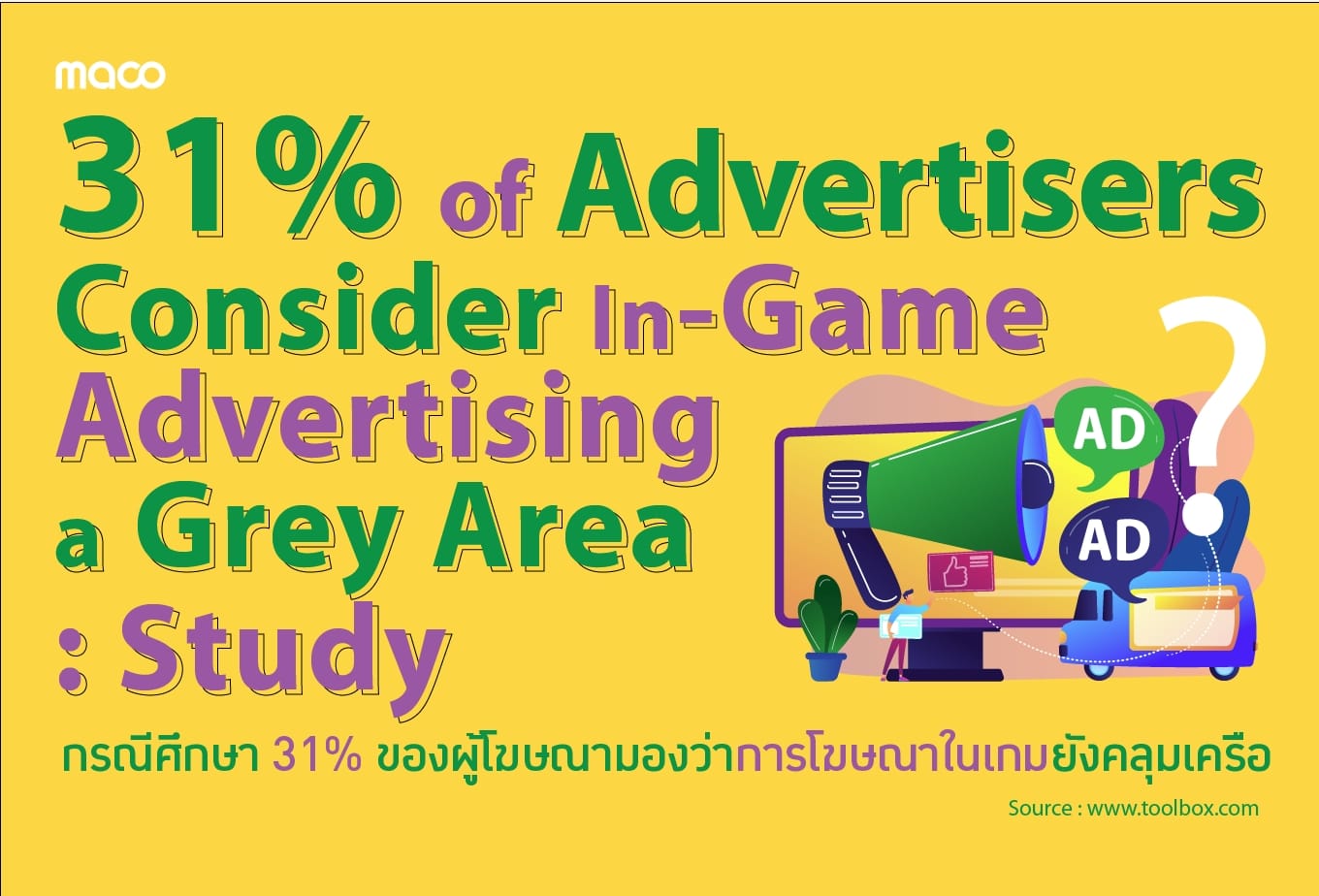
Admix recently surveyed over 400 professionals responsible for media buying in their organizations to understand their understanding of in-game advertising and their plans to tap into the growing audience in the future. A major finding of the study was that while the prevalence of the in-game advertising industry has grown over the year, many advertisers still consider it a grey area.
Many advertisers recognize the vast growth potential of the industry. About 37% of the respondents believe that the average spend of gamers is between $10 and $100 billion, while about 34% believe it is between $100 to $500 billion. Their estimates are close to reality.
According to the World Economic Forum, the total revenue of the gaming industry was about $165 billion in 2020. And it is expected to witness a boom in the coming years. However, despite recognizing this potential, many advertisers underestimate the scale of the gaming audiences. About 33% believed there are about 100 to 500 million daily gamers, while about 27% think there are more.
However, Newzoo estimated last year that there will be more than 3 billion gamers by 2023. Similarly, while many advertisers believe that more people spend time on social media than gaming, the other way was found to be true.
Advertisers Are Unaware of Gamer Diversity
Many advertisers are also unaware of the kinds of people playing video games. They perceive a gamer to be a male IT professional in the age group of 18-25 and 26-35. However, the study showed that about 86% of people aged between 16-69 played computer or mobile games last year. Further, about 50% of those who played games on most days were women. Also, about 46% of those who played games on most days were over 40.
The perception by advertisers is partially because a significant percentage of people who play video games do not identify themselves as gamers, especially women and older gamers. Only about 11% of the people who play exclusively on tablets or smartphones consider themselves gamers. Similarly, only 33% of women who play video games on most days consider themselves video gaming hobbyists.
Yet, Games Advertising Is Growing
While advertisers do not have a clear perception of their target audience, it was found that video games advertising spend increased over the last year. Further, about 81% of the respondents also planned to maintain or increase their games advertising spend over the next year and about 93% plan to run some form of in-game advertisement by 2025.
There are a few reasons for this growth in advertising. About 46% of respondents believe an increase in third-party verification for in-game advertising performance to be the primary reason for this increase in advertising spend. About 40% said an increase in the availability of programmatic options was also critical. About 37% believed an increase in the availability of in-game inventory was a reason. A few other important reasons are shown below.

Reasons for growing in-game advertising spend:
Wide Variety of Terms Are Causing Confusion
The study found that a wide variety of terms used to describe non-intrusive games advertising cause confusion among advertisers. While in-game advertising refers to ads that seamlessly integrate into the gameplay experience, about 32% of respondents associated full-screen interstitials with in-game advertising.
Another 30% associated rewarded videos with in-game. Interestingly enough, about 80% of media buyers feel that ads should not be intrusive. This means that more clarity should be provided to advertisers on how video gaming and in-game inventory work and their impact on player immersion.
Most In-game Advertisements Are Not Scalable
The study found that though a significant number of brands have run in-game ad campaigns, many of them are non-scalable and expensive. It is also difficult to measure the ROI for these campaigns.
Moreover, many advertisers do not combine their custom activity with cost-effective programmatic campaigns that reach the same or similar audiences. Only about 15% of advertisers combined their activations with ongoing gaming activities.
The reason for the lack of ongoing campaigns primarily stems from the lack of awareness of the measurement and infrastructure behind in-game. About 33% cited a perceived lack of in-game infrastructure as the reason, and another 25% felt that in-game ads were difficult to scale and hard to measure.
Lack of Knowledge Hinders Increase in Spend
While in-game advertising is growing, the spending is not exploding, unlike social media. Some of the reasons include lack of knowledge, awareness, or clarity are limiting the spending. About 20% said that a lack of understanding was why they did not invest in in-game advertising. About 31% of respondents consider in-game advertising a grey area and need more education on the infrastructure and ad formats.
There are a few more reasons advertisers are not increasing their spending. Only 39% felt in-game ads were trackable, 43% thought they were scalable, 47% thought they were programmatic, and 47% felt they were independently verifiable.
Source: www.toolbox.com