Back in 1999, “The Matrix” brought to life the image of what an alternate digital world could look like: taking flight, jumping over buildings, and dodging bullets.
Without question, in 1999 it seemed like a thing of the future. In 2022, it seems like a thing of the past.

We compared our Metaverse For Business study with a general study we did to 200 users and marketers across Europe and the USA. Both surveys proved to us that appearances can be quietly deceiving.
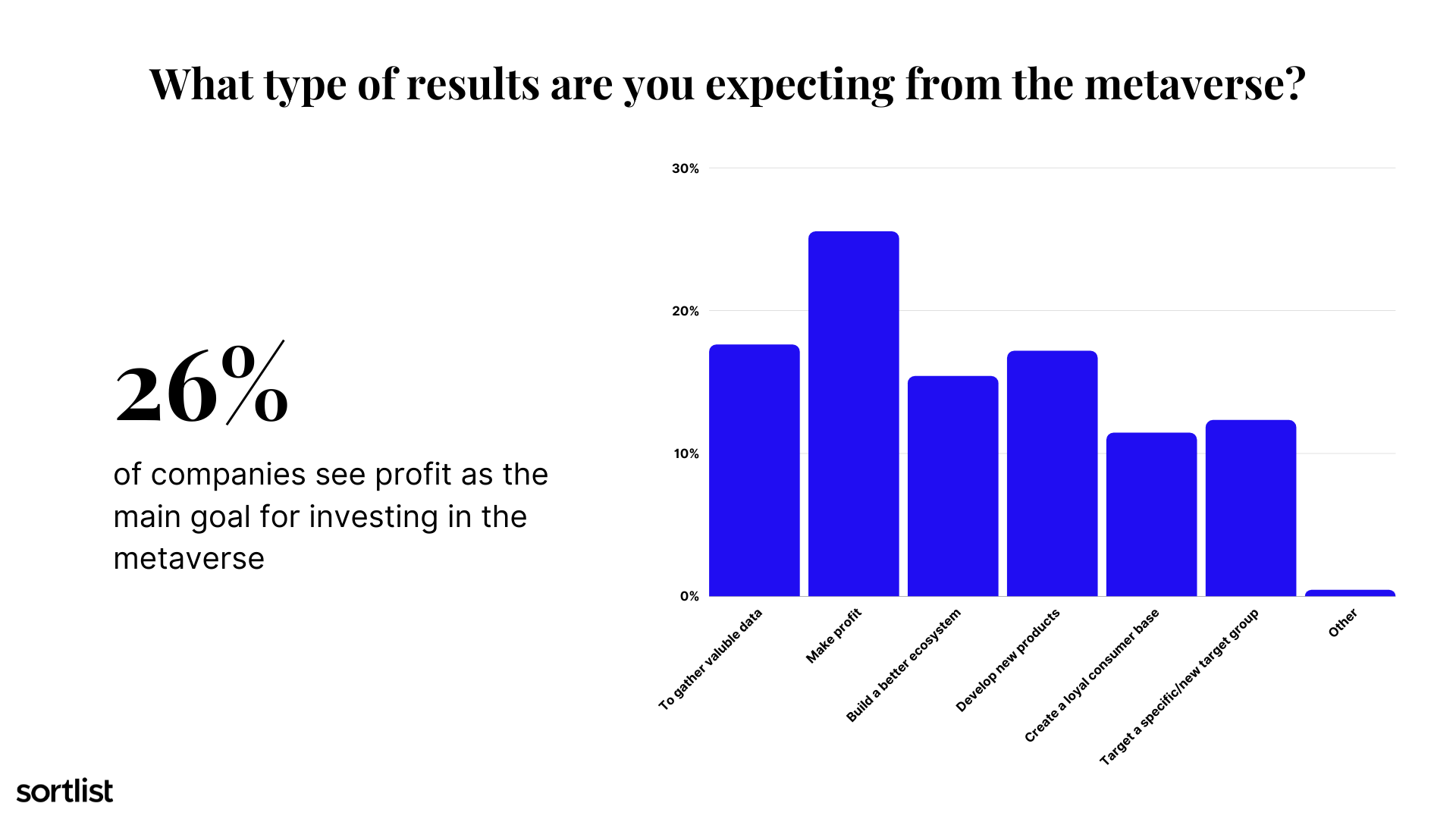
Despite the fact that 20% of users see the metaverse as a “way of escaping the real world,” in practice it has proven to be entirely the opposite for brands, who tend to believe (26%) that a journey into virtual worlds will yield something more than just entertainment for customers: profit.
These are companies that expect to see a return on their investment in the metaverse, ahead of the 18% who expect to gather data from it and the 17% who seek to develop new products there.
When asked to define the budget they reserved for metaverse projects, 33% of companies claimed it was approximately 10-20% of it.
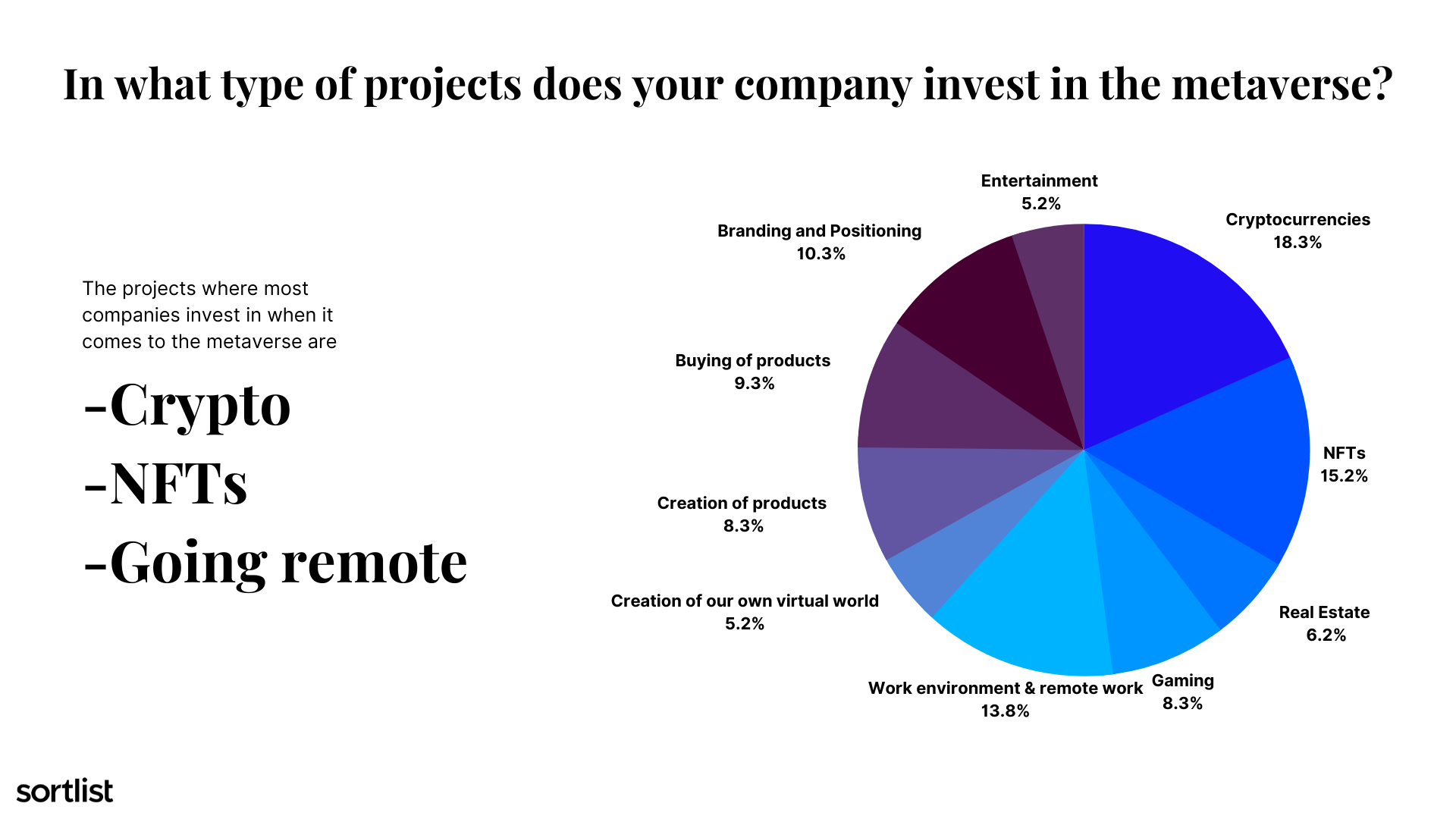
Companies that have invested in metaverse understand that this new realm is directed mostly towards:
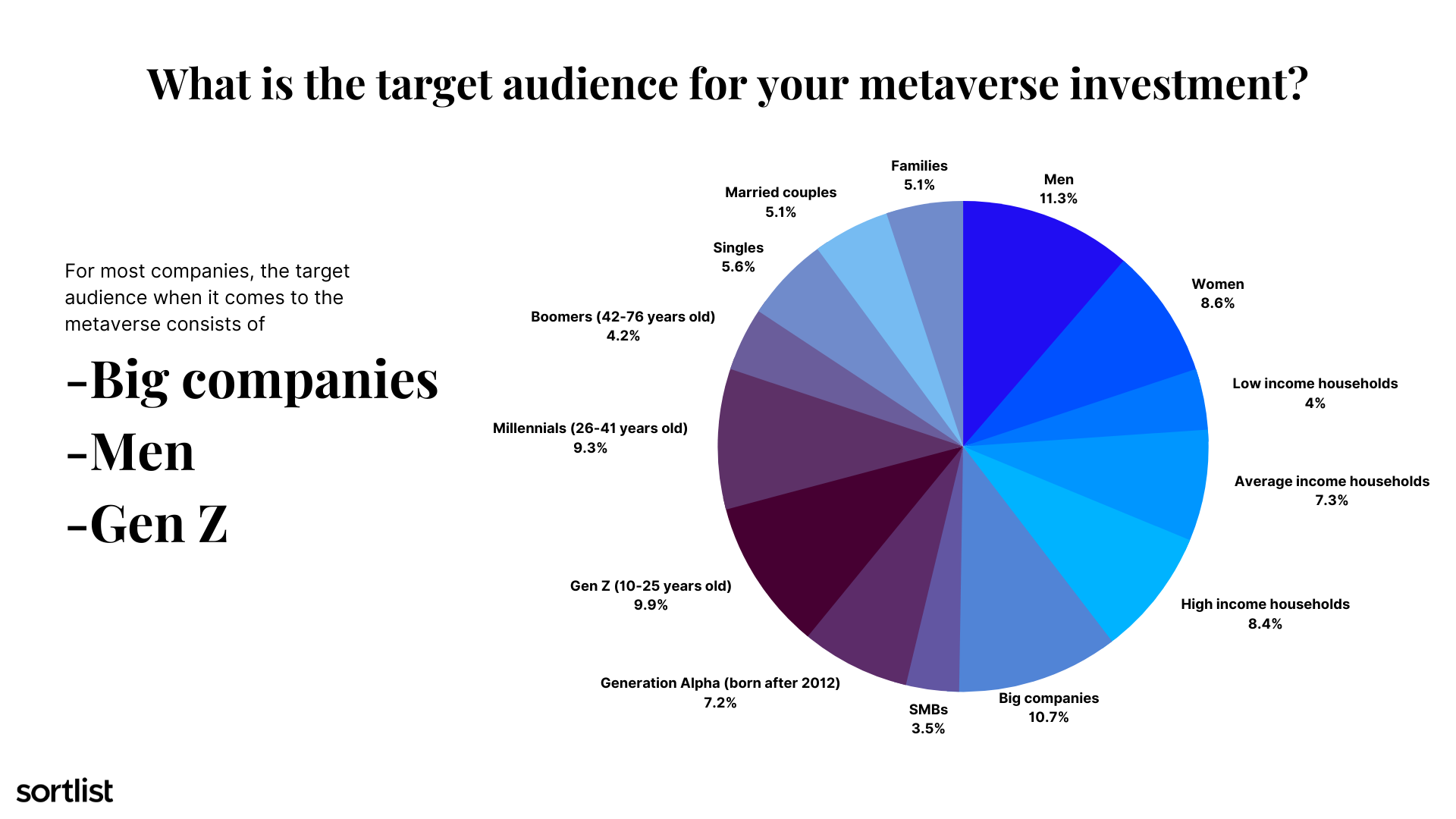
Furthermore, 47% of brands already investing in the metaverse affirm that it is their innovation departments that are most interested in metaverse initiatives. This proves that companies are ready for new technologies in the field, but also stresses an important reality: innovation departments are a trademark of bigger companies.
All work and no play makes the metaverse a dull place
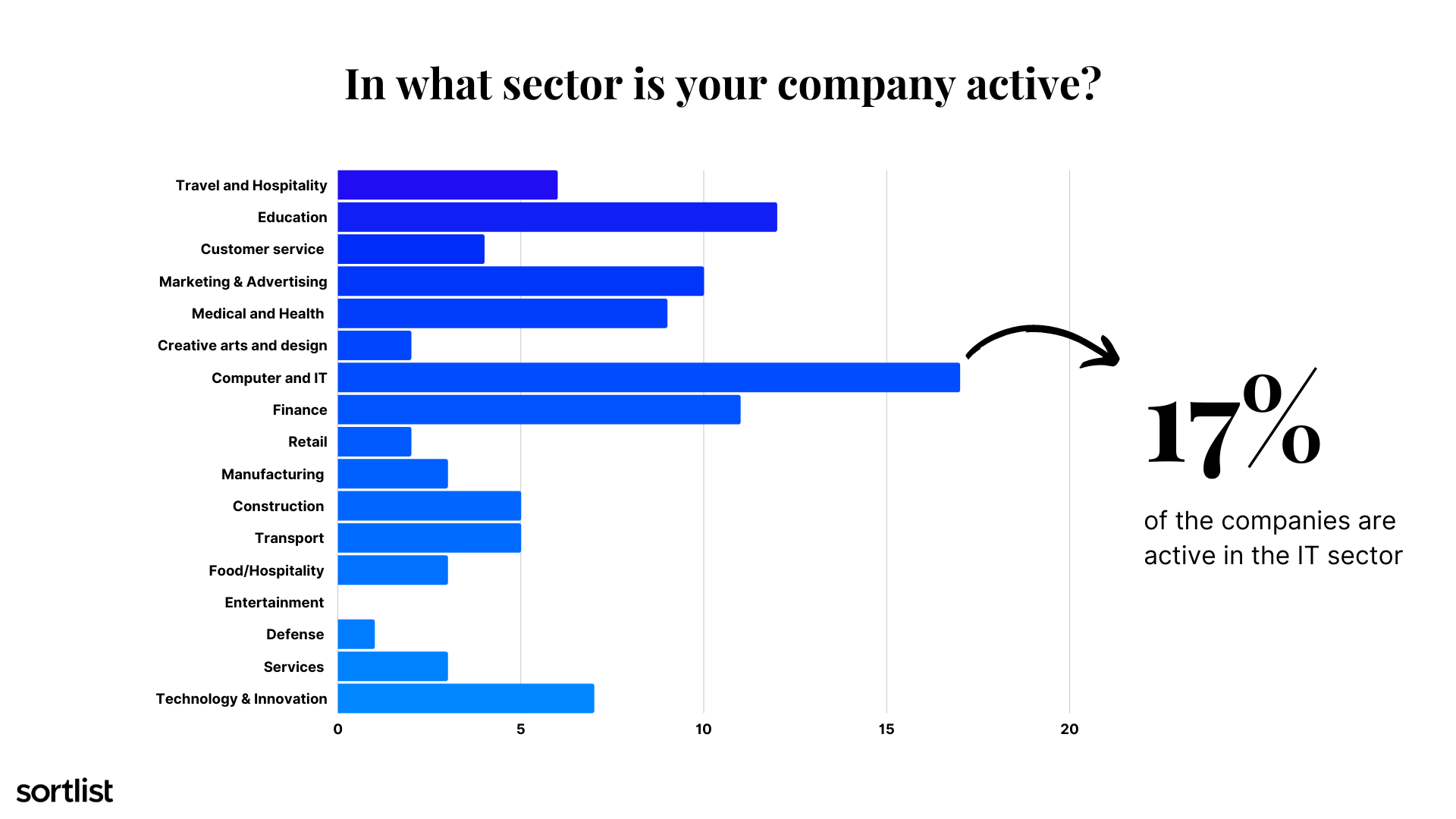
None of the 200 surveyed companies belong to the entertainment business. Instead, the industries of IT (17%) and education (12%) are the predominant sectors.
They are followed by the industries of finance (11%) and marketing and advertising (10%), confirming the massive potential that businesses see in the metaverse as another income stream.
With innovations like these, a new study seems warranted: will the metaverse be another factor in the education field responsible for widening the gap between the haves and the have-nots.
Problems of Pandemic Proportions: The metaverse formula that succeeded
We mentioned at the beginning of our Metaverse For Business study that a large number of companies had already begun investing in the metaverse long before Facebook announced it.
In fact, an astonishing 66% of companies had given thought about investing time and money there before Facebook turned into Meta.
As if that weren’t enough, the majority of the companies surveyed (31%) said that the recent events in Ukraine had no effect on their metaverse strategy.
This is yet more proof of the impact that digitalization had for businesses across all spectrums after the pandemic became a reality.
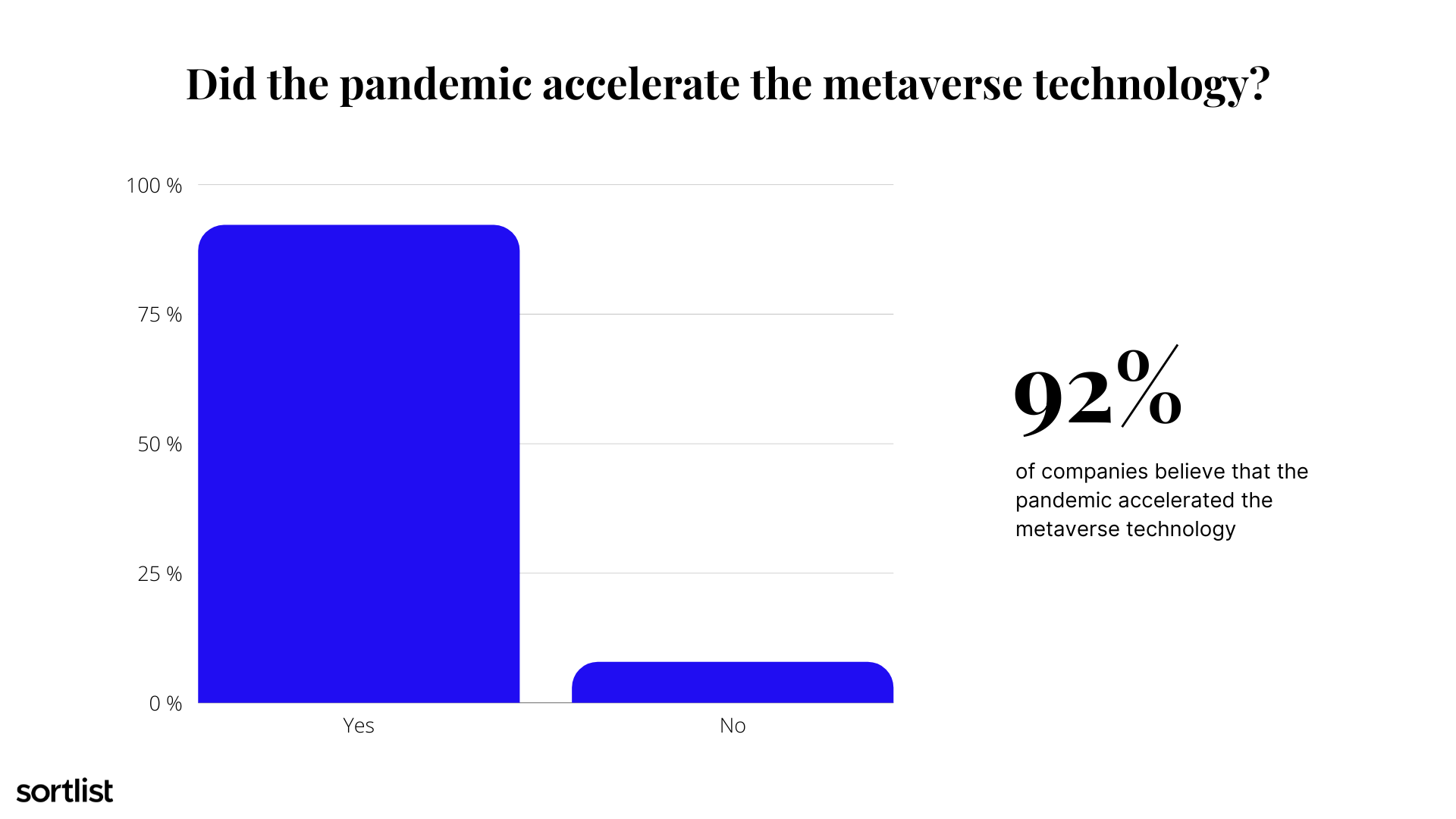
It is not surprising, then, to find that the combination of the health crisis and the need of companies to achieve digital transformation boosted interest in the metaverse as a business opportunity. A stellar 92% of companies surveyed said that the pandemic accelerated the metaverse technology.
NFTs, crypto, and going remote
The metaverse seems to have given proper validity to two other technologies that have been steadily on the rise: cryptocurrencies and NFTs.
Our Metaverse For Business study at Sortlist shows that these are the top projects companies are investing in inside the metaverse, with 18% of brands focusing on crypto and 15% on NFTs.
Cryptocurrency has been hailed in recent years as the future of transactions across countries. Investment in the metaverse is still viewed as a big risk, which could explain why trends like decentralized finance (DeFi) jump out as a favorable alternative.
As a matter of fact, we asked companies whether or not the recent events in Ukraine had an impact on their investments or strategies regarding the metaverse. 27% said they didn’t, and a higher 31% also agreed the events had no effect on their strategy, since they believed the metaverse to be “more important” than ever.
While both push digital transformation, it seems global events like pandemics strike the farthest.
Additionally, the metaverse presents itself not only as an opportunity to do business, but also as a potential solution that the pandemic brought forward: remote work.
14% of brands in our Metaverse For Business study said they were investing in remote office environment projects inside the virtual world.
Cybersecurity Insecurity
Despite the fact that businesses in general are quite keen on delving into the new virtual world, there are still some legitimate concerns that keep them from diving head-first.
The main one is cybersecurity. It stands out as the main doubt that companies have with the metaverse, with 38% of brands worried about the security and data protection of both their own business and that of their customers.
Source: https://www.sortlist.com