Fast-moving consumer trends are urging marketers to be bolder in their approach, sparking more data-led campaigns and more audience-centric storytelling.
On top of that, brands now have a host of channels at their fingertips, from social media to email marketing, from brand awareness campaigns to google ads, the offline and online world is your oyster. But each channel requires a different kind of finesse – you need to tell the same story differently.
The fight for consumers’ attention – and their money – is getting harder. So how can brands stand out?
In recent months, we’ve witnessed some of the best marketing campaigns hit our TV screens, our social media feeds, our sports games, and even our commutes. If you’re on the hunt for inspiration, we’ve rounded up 6 marketing campaign examples to get your creative juices flowing.
Reddit’s brand awareness Super Bowl advert
Super Bowl airtime is hot currency for brands. And it makes sense if you want to get in front of your target audience. Our data shows that over 1 in 2 NFL fans say they find new products through TV ads, and 41% of Americans watch or follow the NFL.
So that eye-magnet spot at the Super Bowl is an expensive one. It’s estimated that in 2022, 30-second ad slots were selling pretty quickly for around $6.5 million – the most expensive in NFL history.
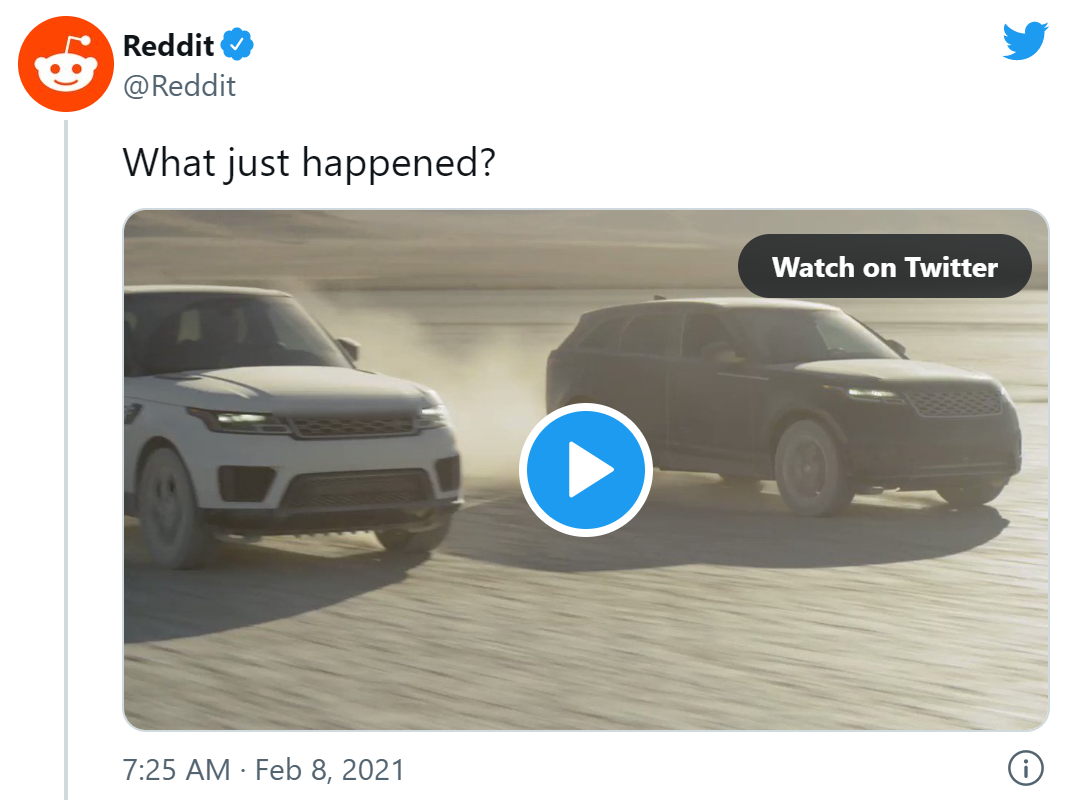
Reddit took a huge gamble, and it paid off. It bought a five-second ad slot at the Super Bowl.
Starting out with what seemed to be some generic car promo, it cut into a glitch-like screen. The ad was so confusing people thought it was an accident. Viewers flocked to social media to find out what just happened. And they found a Tweet by Reddit waiting for them – which has since racked up 464,000 views on the social media platform.
According to The New York Times, it became one of the most talked-about, attention-grabbing, memorable, and shared ads of the day.
They took a risk with their content of choice, but it was a good one.
The lesson for brands? Less can be more. Think outside the box. And don’t be afraid of the strange.
Dove’s video marketing ‘Reverse Selfie’ advert
80% of girls distort the way they look online by the age of 13. It’s a stark statement, but it’s true. Social media forces us to compare our behind-the-scenes lives to everyone else’s highlight reels.
Impressionable teenagers aren’t just seeing other people’s Facetuned features in their feeds. They’re seeing their own faces augmented by plastic surgery filters.
These can easily be added to Instagram stories for others to compare themselves to, but teenagers can also spend hours privately seeing how they’d look with bigger lips, slimmer faces, or clearer skin.
So, Dove thinks we need to talk. And it says so loud and clear – without even promoting its products.
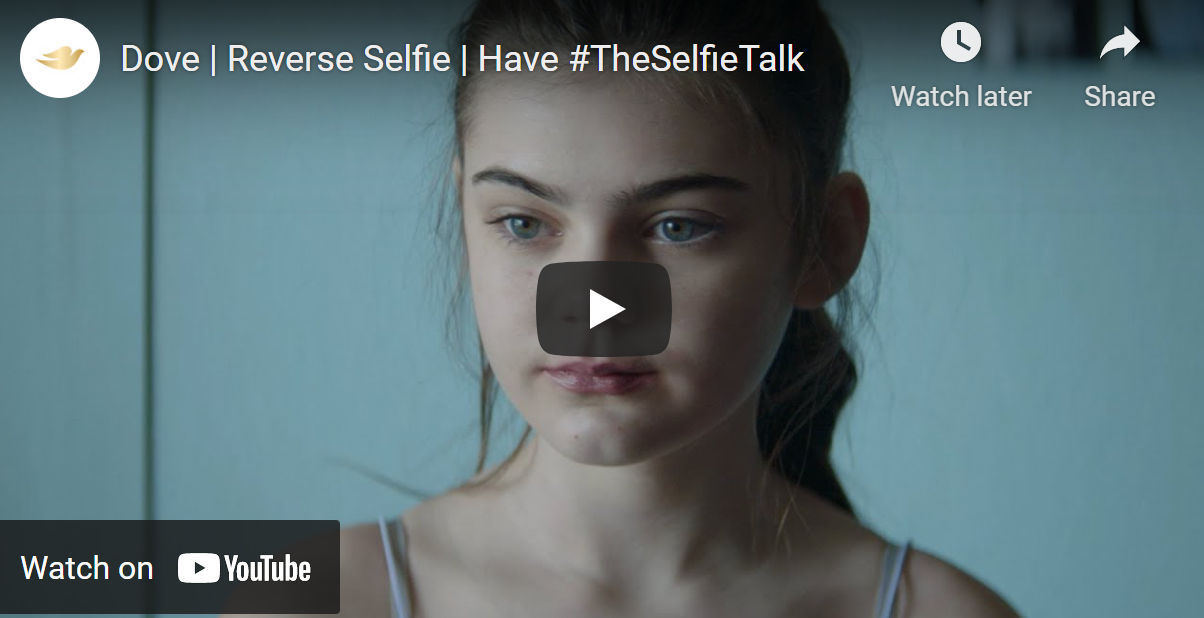
The video advert shows the entire process of a girl getting ready for and taking a selfie, then editing and uploading it – but all in reverse. It ends with a simple shot of the girl – whose young age becomes so apparent once we see her unedited, bare face. The slogan reads, ‘The pressure of social media is hurting our girls’ self esteem.’
Our data shows that 27% of Gen Alpha girls aged 12-15 want to see all types of people in TV shows and movies, and 42% say their role models are actual people in their lives.
Meanwhile, 42% of Gen Zs around the world want brands to be authentic, and in the US, Gen Zs are less interested in influencers and celebrity news compared to last year. These shifts are bound to change the face of influencer marketing in 2022 and beyond.
Duolingo’s TikTok and social media strategy
Duolingo’s TikTok had 2.9 million followers by February 2022 up from just 50,000 followers in September 2021, and its videos have over 55 million likes.
How? Simple: it’s got a green owl mascot that’s obsessed with Dua Lipa. Duh! The content centers around Duo the owl practising pick-up lines for the pop star.
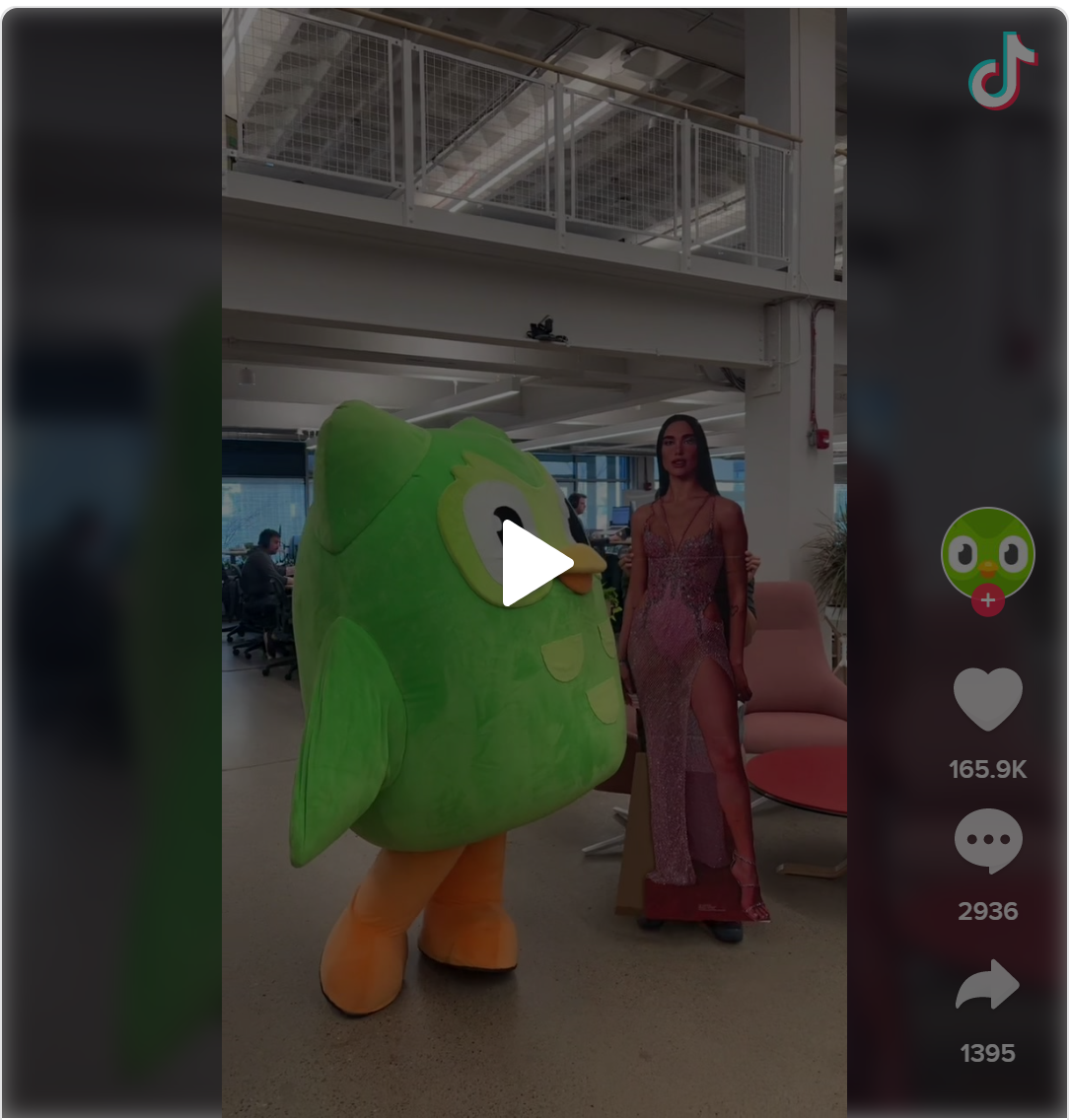
If you’re wondering how this relates to people learning a new language, the answer is it doesn’t really. But that’s kind of the point. At its core, successful content marketing doesn’t explicitly promote products, but it stimulates an interest in a product, service, or brand.
Duolingo’s TikTok strategy is focused on entertaining its target audience with skits, rather than selling a product, which is exactly the kind of content TikTok users want – they’re 38% more likely than other social media users to say they want brands to be funny.
In fact, our data shows that humor and creativity are valued most on TikTok, with 63% of users saying they want ‘funny’ content on the app.
The social media marketing strategy has turned the brand into such a powerful presence that it’s inspired user generated content. People have begun responding with their own TikTok.
Tesco’s out-of-home Ramadan billboards
During the holy month of Ramadan, Muslims around the world fast from sunrise to sunset. In the evening, upon the call to prayer, families gather together to eat at Iftar (breakfast). And in April 2022, the British supermarket Tesco showed its support for the practice in a powerfully poetic way.
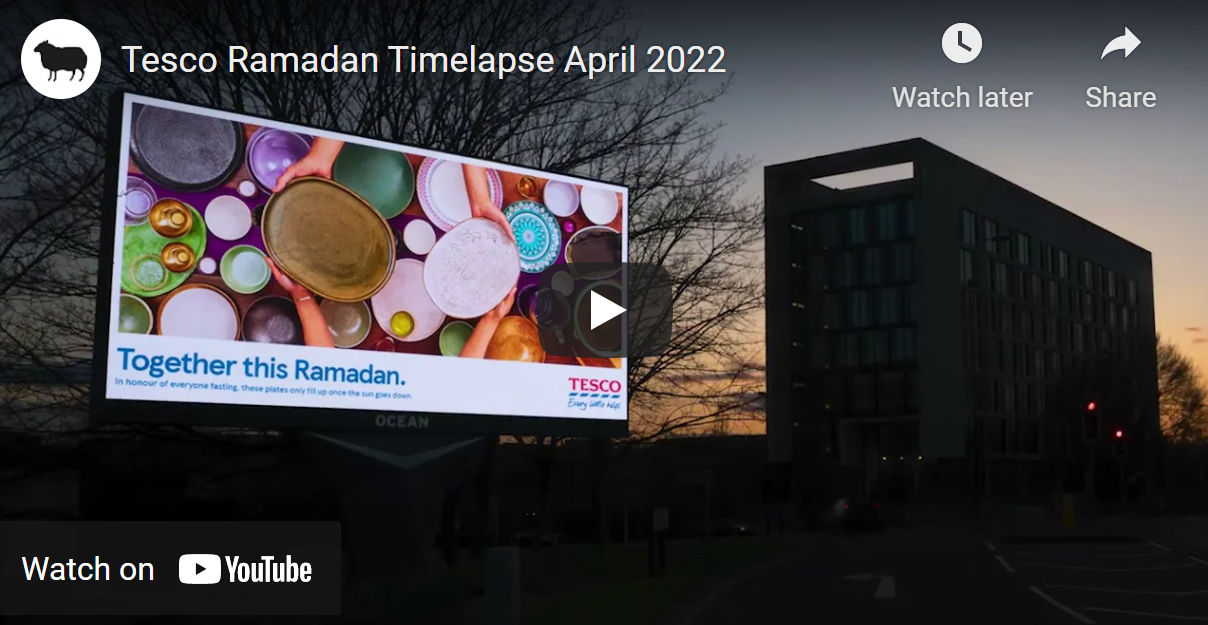
Its digital billboard, which features hands holding empty plates, comes to life as the sun sets, and food slowly fades in to fill the table. Underneath the image is a slogan that reads, ‘Together this Ramadan’, and an explainer that says, ‘In honor of everyone fasting, these plates only fill up as the sun goes down.’
It’s a fantastic example of how out-of-home advertising can be elevated by the right placement.
Not only do the billboards feature in areas with high Muslim populations, but they always face east, so the sun sets behind them, accentuating the relationship between fasting and sunset.
OOH advertising can yield serious results, especially in local areas. Plus, our data shows roadside ads are remembered by 46% of commuters, followed by ads on a bus, bus station, or a bus stop 38%, so focusing on the right placement – even with a modest media budget – can make an impact.
As we can learn from Tesco, simple and memorable seem to work best. The initiative is also being supported by a social media campaign involving inspirational recipe sharing.
CPB London’s ‘Imagine’ campaign
In 2022, the theme for International Women’s Day was ‘Break the Bias’, and CPB London did just that.
After learning that 39% of primary school kids around the UK “still think that mummies should look after babies and do all the housework while daddies should go to work”
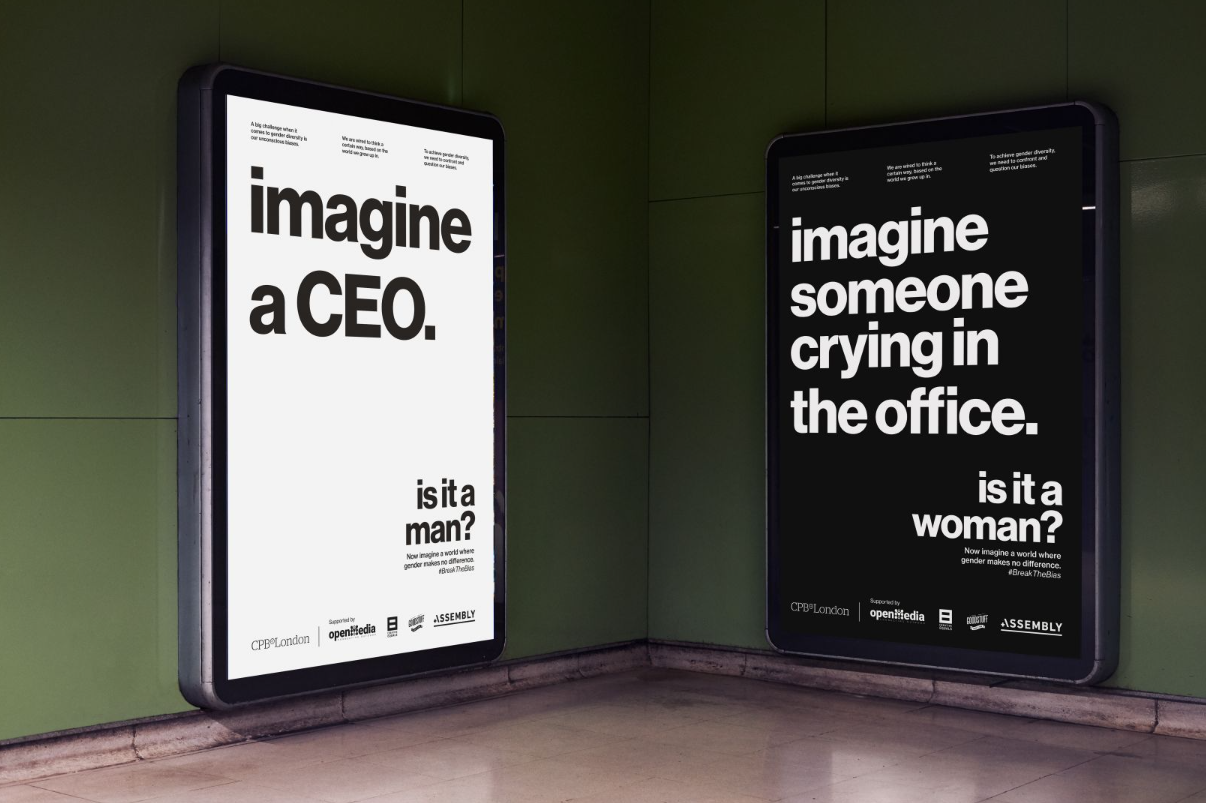
This marketing campaign wants you to imagine a world in which gender makes no difference to who you are and what you can do. The campaign features a range of bold, lowercase text-only posters that say things like ‘imagine someone in a board meeting’, and ‘imagine a nurse’.
Underneath them all are questions that challenge your instant bias – ‘is it a man?’, and ‘is it a woman?’.
The campaign was also launched with a children’s coloring book, which prompts additional conversations around gender roles.
“We all have unconscious bias, and the only way to change that is to question, and to get people talking”
Helen James, managing director at CPB London, explained. We love this campaign because it’s data-led. It was inspired by a powerful statistic – albeit a sad one.
Our data shows a slightly more promising picture for girls just above the primary school age bracket: 50% of Gen Alpha girls aged 12-15 believe they can do any job they want to. But there’s another 50% that need to learn they can, too.
The Hustle’s email marketing expertise
The Hustle was never meant to be a media company, but it became an incredibly successful one. It all started when Sam Parr was looking for a new challenge.
He rounded up entrepreneurs and innovative thinkers and threw together an event called Hustlecon. It was a hit, and the event soon spun off into a website with great content.
But Parr didn’t feel it was intimate enough. He wanted to get into inboxes – a sacred space that, when planned right, can help you connect with customers via digital marketing in a direct way.
Parr explains, “If you go and do some research on ecommerce companies…email is one of the most predictable ways they earn revenue. An email subscriber is worth more than any other kind of subscriber. I knew that, just because that’s data that exists.”
So, the Hustle newsletter was born. And it became one of the best marketing campaigns.
The Hustle merges content marketing with email marketing seamlessly, and it focuses on adding value to its customers’ lives.
It features snackable, super-relevant tech, business, and innovation insights that are well-researched and data-led. You can customize the topics you read about, enjoy a meme a day, and chuckle to yourself at how punny the reporting is.
The Hustle knows how to ace the customer experience. And if you’re not enjoying it, you can say so, with every email featuring a ‘love it’ to ‘hate it’ rating scale Plus, if you’re on the go, you can listen to the content in podcast form.
Source : https://blog.gwi.com