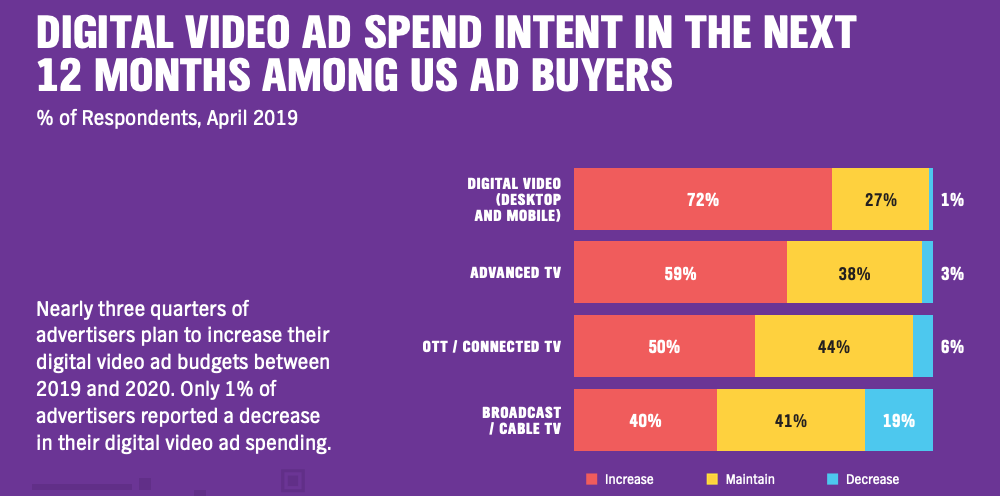
Traditionally, brands advertised on broadcast and cable TV, but have transitioned more and more to digital ads. So, not only are brands increasing their video ad budgets, but leveraging modern channels instead of traditional methods of delivery.
Digital video ads present advertisers prime opportunities for data collection, brand exposure, enhanced targeting, and personalization – capabilities that traditional TV ads can’t compete with. Digital video ads are the future because they allow advertisers to connect with audiences in a format they prefer.
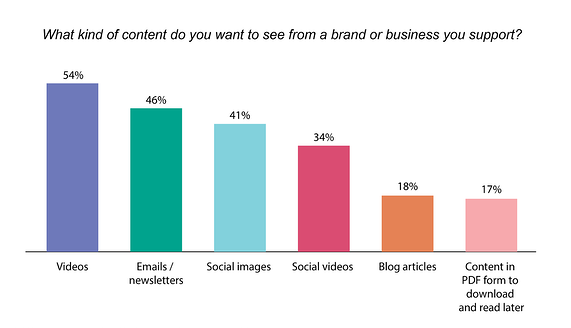
Video ads have evolved from being one piece of your overall digital advertising plan, to possessing a critical role in engaging potential customers. In fact, HubSpot research states that more than 50% of consumers want to see videos from brands — more than any other type of content:
Owing to their format, video ads give advertisers unique opportunities to engage and convert prospects better than standard image ads — making them the future of digital advertising.

1. Video ads have higher engagement
Video ads merge two things that catch user attention: movement and sound. Both of these play an important role in conveying an efficient message, hence leading to better engagement.
When MediaMind analyzed over three billion ad impressions globally for six months they found that prospects is 27.4 times more likely to click-through online video ads than standard banners
Where image or text ads rely on the copy, punctuation, and visual cues to convey the desired tone, video ads use movement and sound to capture visitor attention. The ad format is more efficient at delivering your narrative to the target audience with a tailored message that is easy for them to consume.
Video ads that pique the interest of users and follow through with a persuasive final call-to-action are bound to have success with keeping audiences interested.
Research suggests the average user remembers 95% of a message when it is watched, compared to 10% when it is read. This means prospects are more likely to remember your message via a video ad than an image or text ad. Moreover, a user’s positive experience with a video ad increases their purchase intent by 97% and brand association by 139%.
2. Video ads are shareable
Users are naturally more inclined to share videos since more than 700 videos are shared by Twitter users every minute.
Video ads are concise, relatable, and have a story to tell – all of which make them shareable. Video ads offer brands a great way for them to express themselves and why many people find them worth distributing.
For example, Poo Pourri’s famous video ad has amassed over 42 million views and helped the company value increase from $10 million $30 million soon after their video ad went viral. Another viral video ad is Purple mattress’ raw egg test ad which currently has over 185 million views:
3. Video ads have higher a click-through rate
The fact that video ads tell a better story than typical banner ads makes the former not only better at engaging audiences but also getting more clicks.
According to a study done by Smaato, the average CTR of video ads in mobile apps is 7.5 times higher than for display ads. Facebook video ads also have higher CTR than image ads. ClearPivot, a digital marketing agency saw video ads exponentially drive more clicks than image ads for their clients –by as much as 20 to 30% more clicks.
When Cardinal Digital Marketing A/B tested a video versus an image ad for a travel and tourism brand, they found that with all other factors being the same, video ads generated a 47% higher CTR, despite Facebook generating higher impressions for the image-based ads.
Though video ads are more time consuming and expensive to create, their ability to effectively narrate your story allows you to engage more prospects and get more ad clicks.
Source : https://instapage.com